
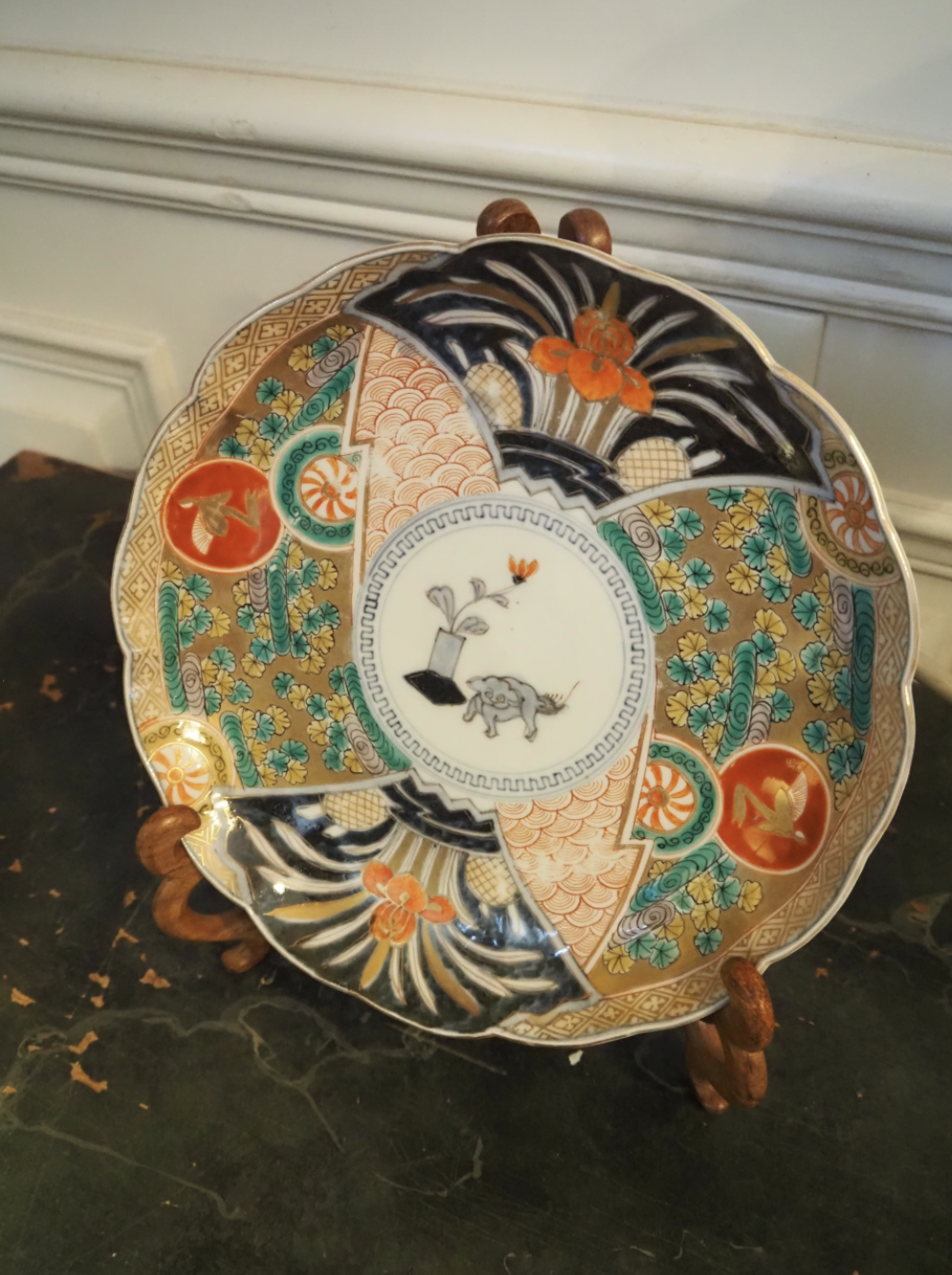
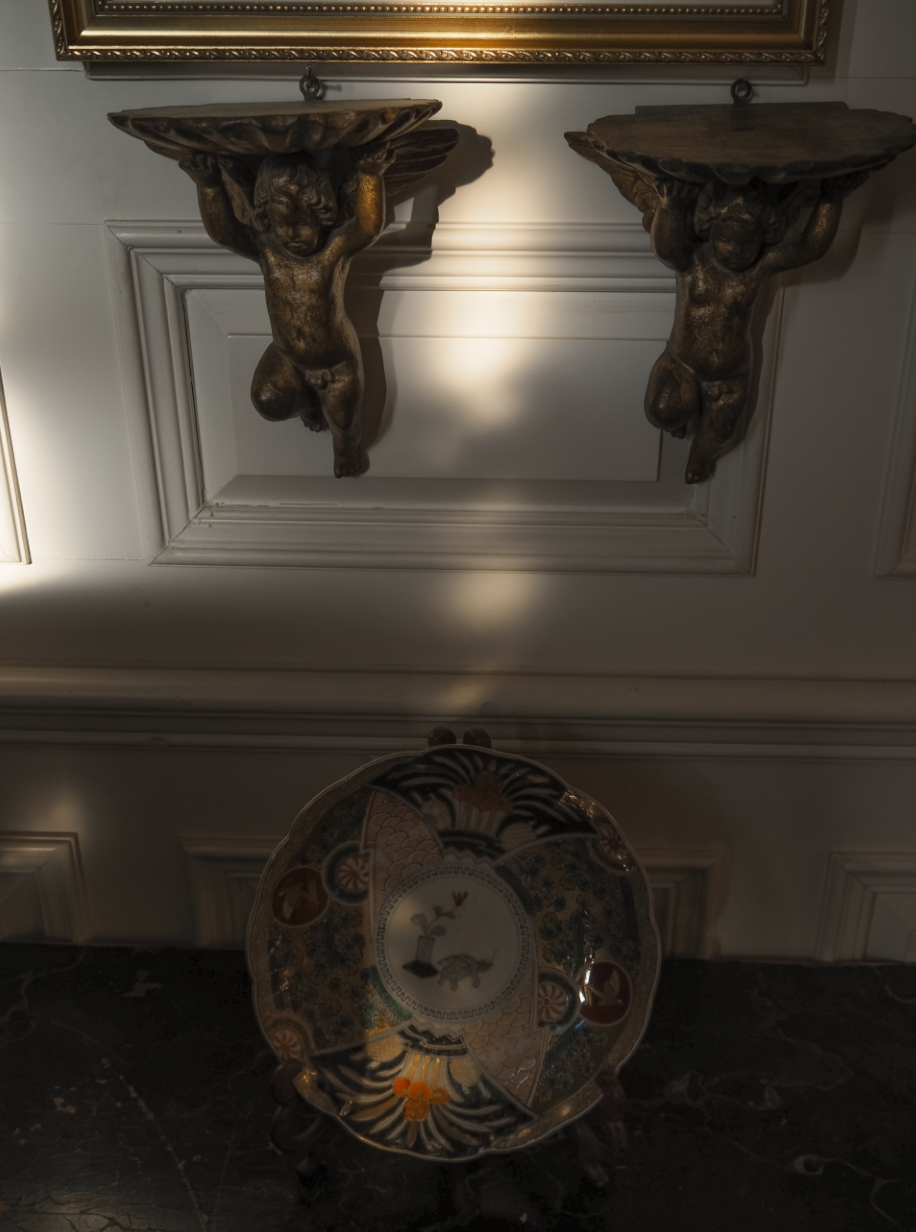
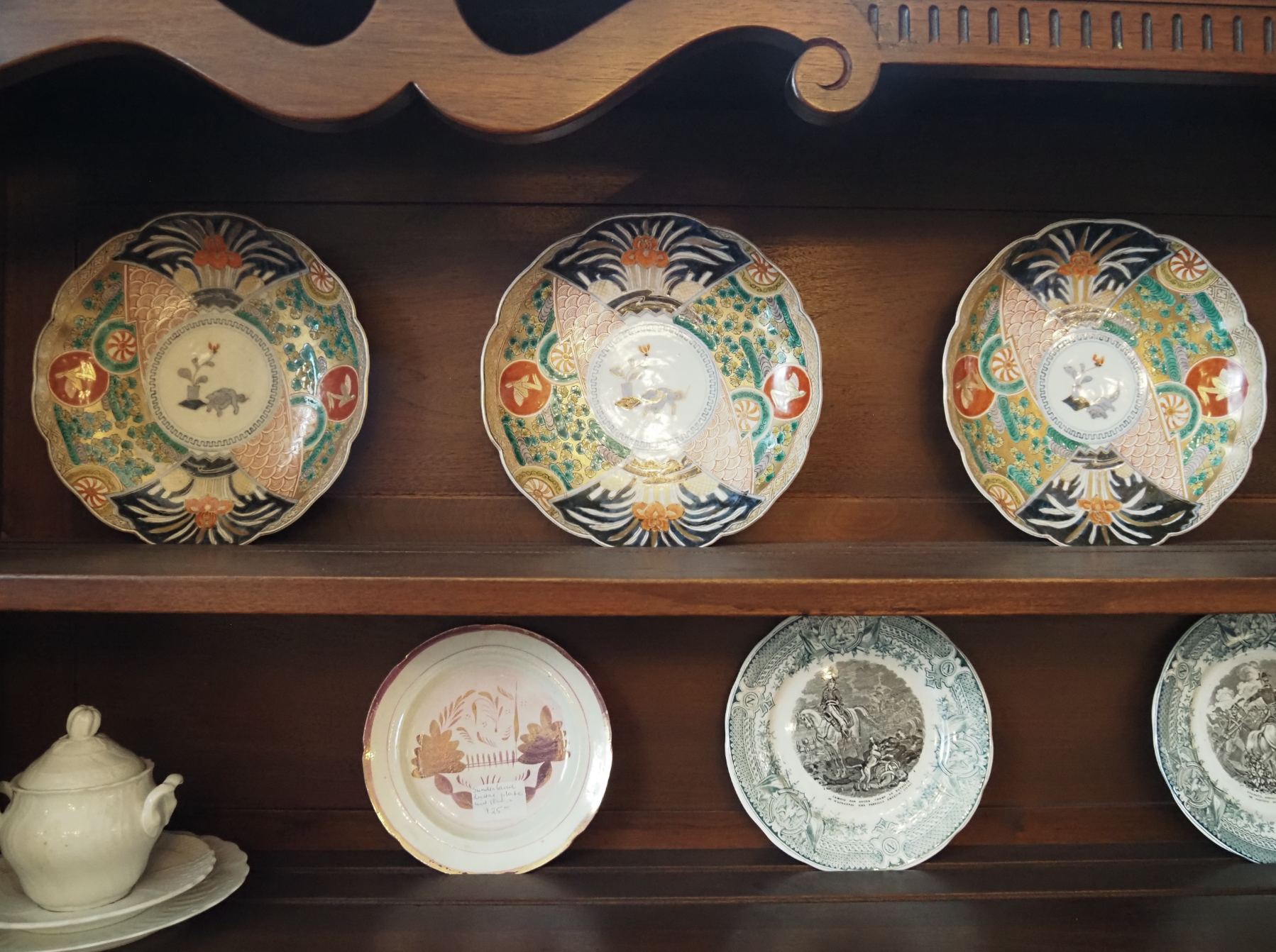
This set of four Imari plates reflects the late 19th-century approach to surface and ornament, where color and pattern are organized within a contained form. The scalloped edges introduce a subtle variation to the silhouette, softening the circular structure while maintaining overall symmetry.
The surfaces are defined by the characteristic Imari palette, with areas of blue establishing a visual ground and allowing other tones to register in contrast. The decoration is distributed across each plate in a balanced composition, creating continuity across the set while allowing for slight variation between pieces.
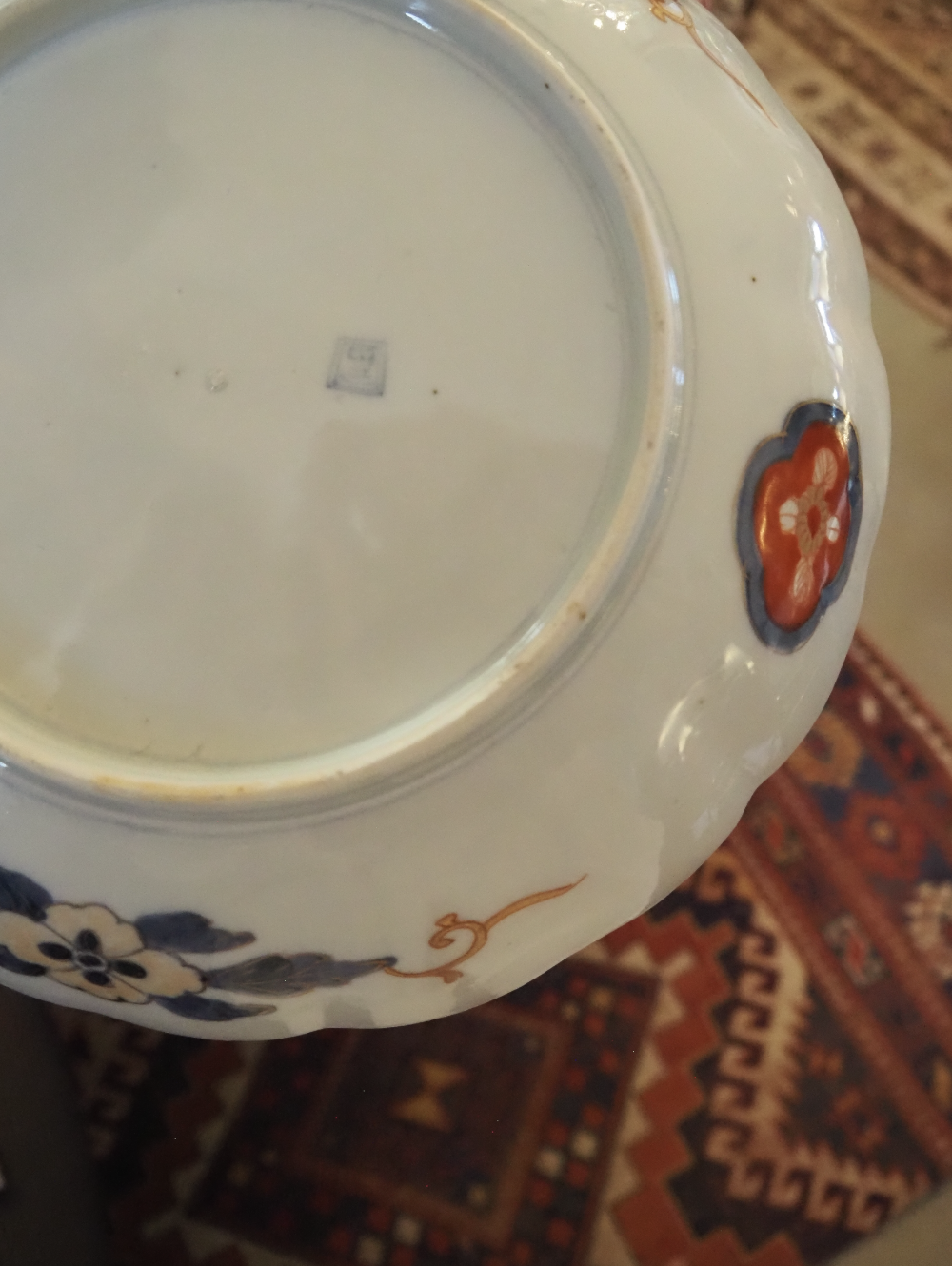
Marked with a blue stamp on the underside, the plates carry the material and decorative language associated with period Imari production. Presented together, the set reads as a cohesive arrangement, where repetition and variation operate in parallel.
-Size:
-Materials: porcelain with underglaze and overglaze decoration
-Provenance: 1890s, late 19th century
-Made in: Japan
- Notes: blue stamp on underside; wear consistent with age; minor variation in pattern and glaze typical of hand-decorated production
This set of four Imari plates reflects the late 19th-century approach to surface and ornament, where color and pattern are organized within a contained form. The scalloped edges introduce a subtle variation to the silhouette, softening the circular structure while maintaining overall symmetry.
The surfaces are defined by the characteristic Imari palette, with areas of blue establishing a visual ground and allowing other tones to register in contrast. The decoration is distributed across each plate in a balanced composition, creating continuity across the set while allowing for slight variation between pieces.
Marked with a blue stamp on the underside, the plates carry the material and decorative language associated with period Imari production. Presented together, the set reads as a cohesive arrangement, where repetition and variation operate in parallel.
-Size:
-Materials: porcelain with underglaze and overglaze decoration
-Provenance: 1890s, late 19th century
-Made in: Japan
- Notes: blue stamp on underside; wear consistent with age; minor variation in pattern and glaze typical of hand-decorated production