
SUMMER IN PROVENCE
-
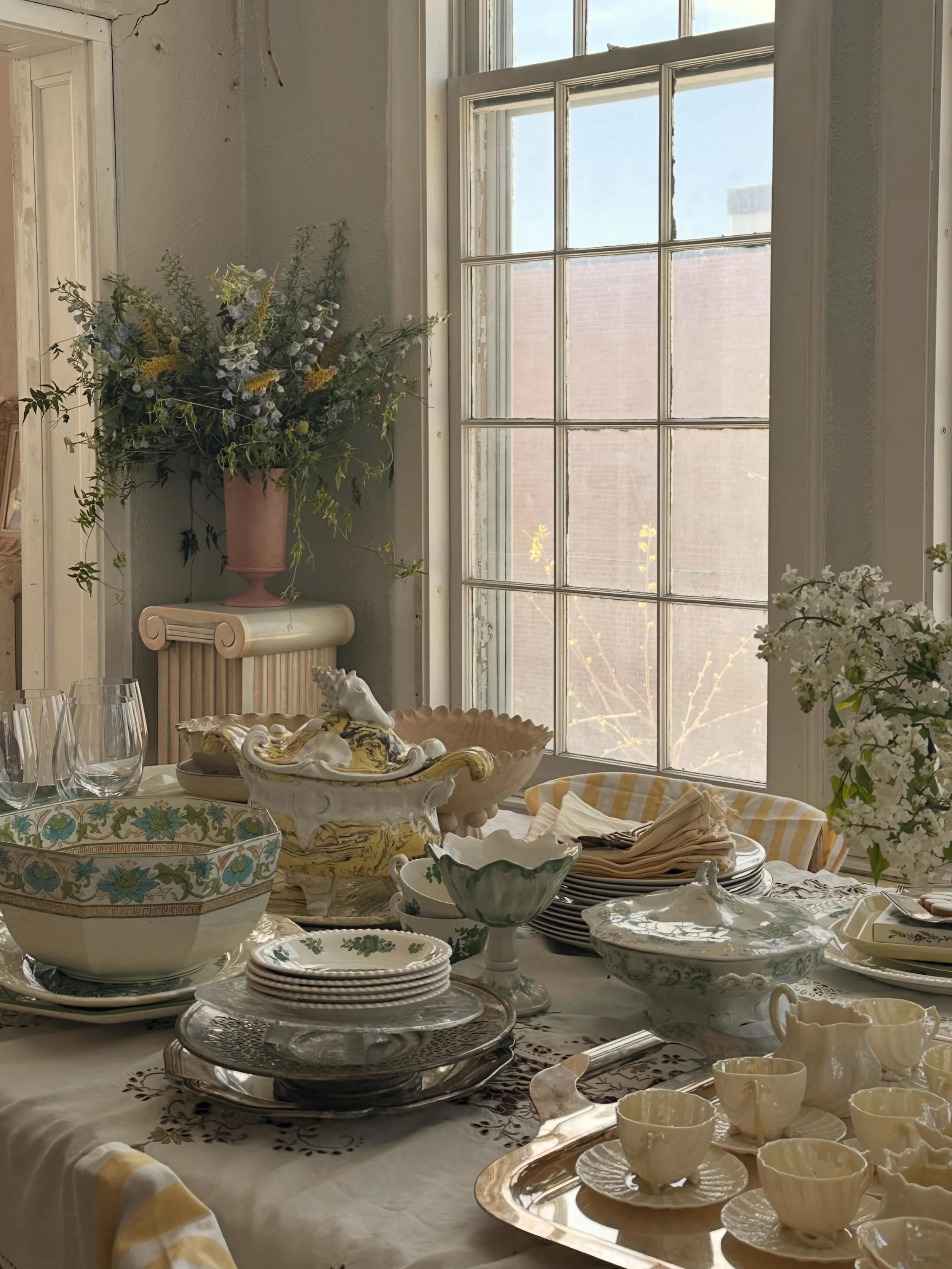
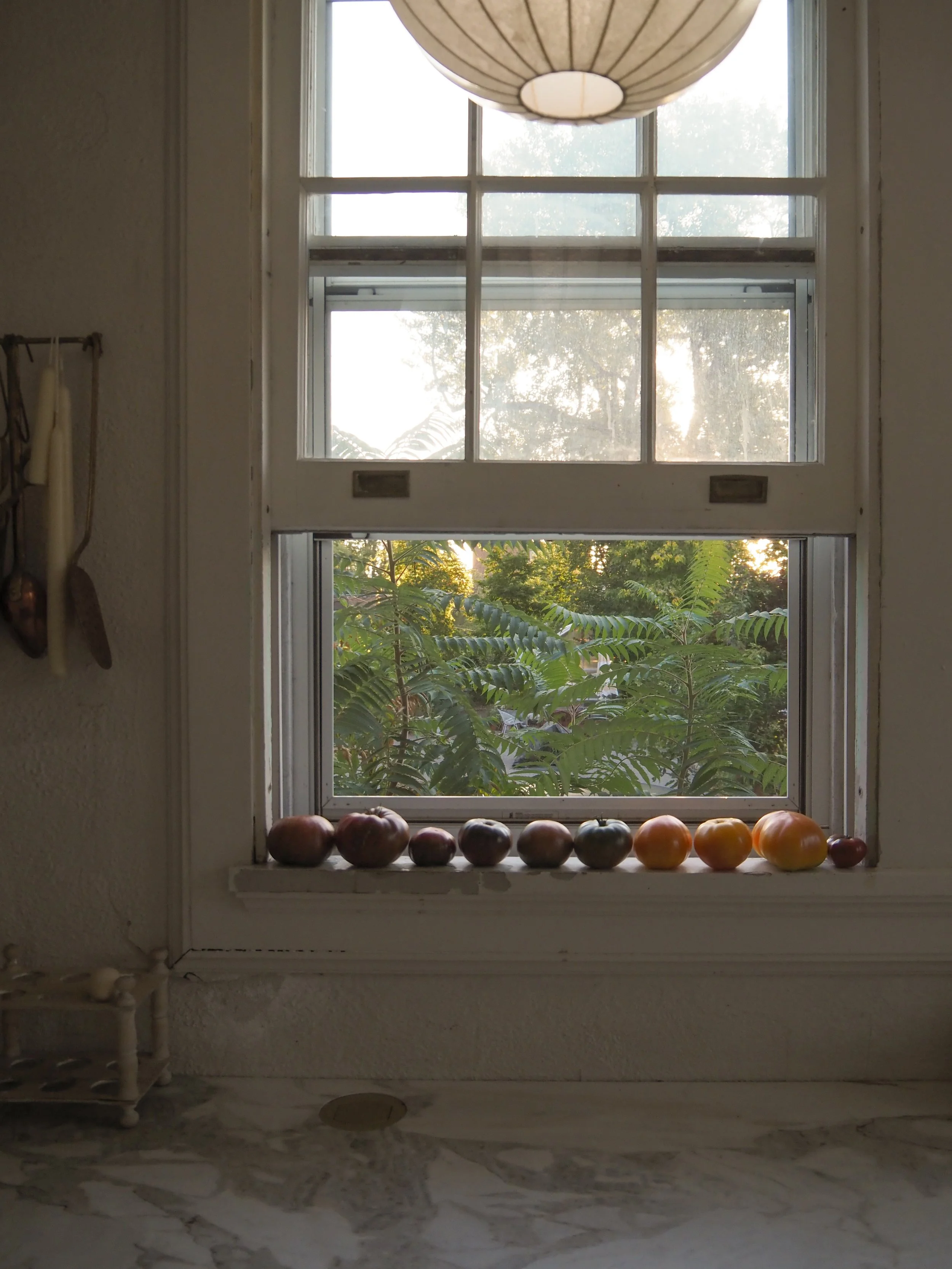
Summer in Provence arrives slowly. Market tables fill with tomatoes still warm from the vine, melons perfume the air, and linen dries in the afternoon sun. Lunch stretches into evening as shutters remain open, conversations linger, and the table becomes less a destination than a place returned to throughout the day. This collection gathers objects made for that rhythm: vessels that house simple ingredients, generosity amongst friends, and pleasure of staying a little longer.
SHOP THE TABLE
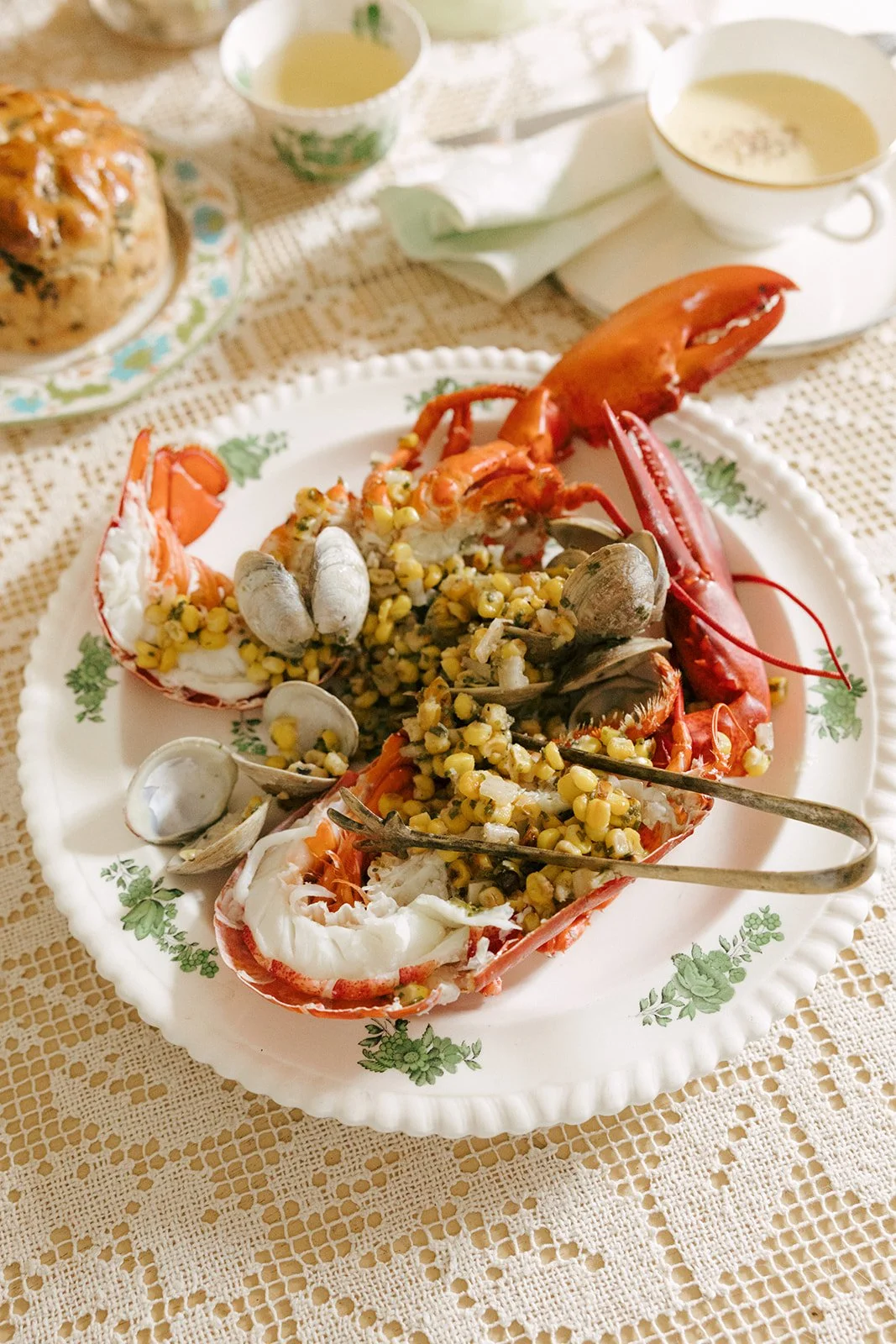
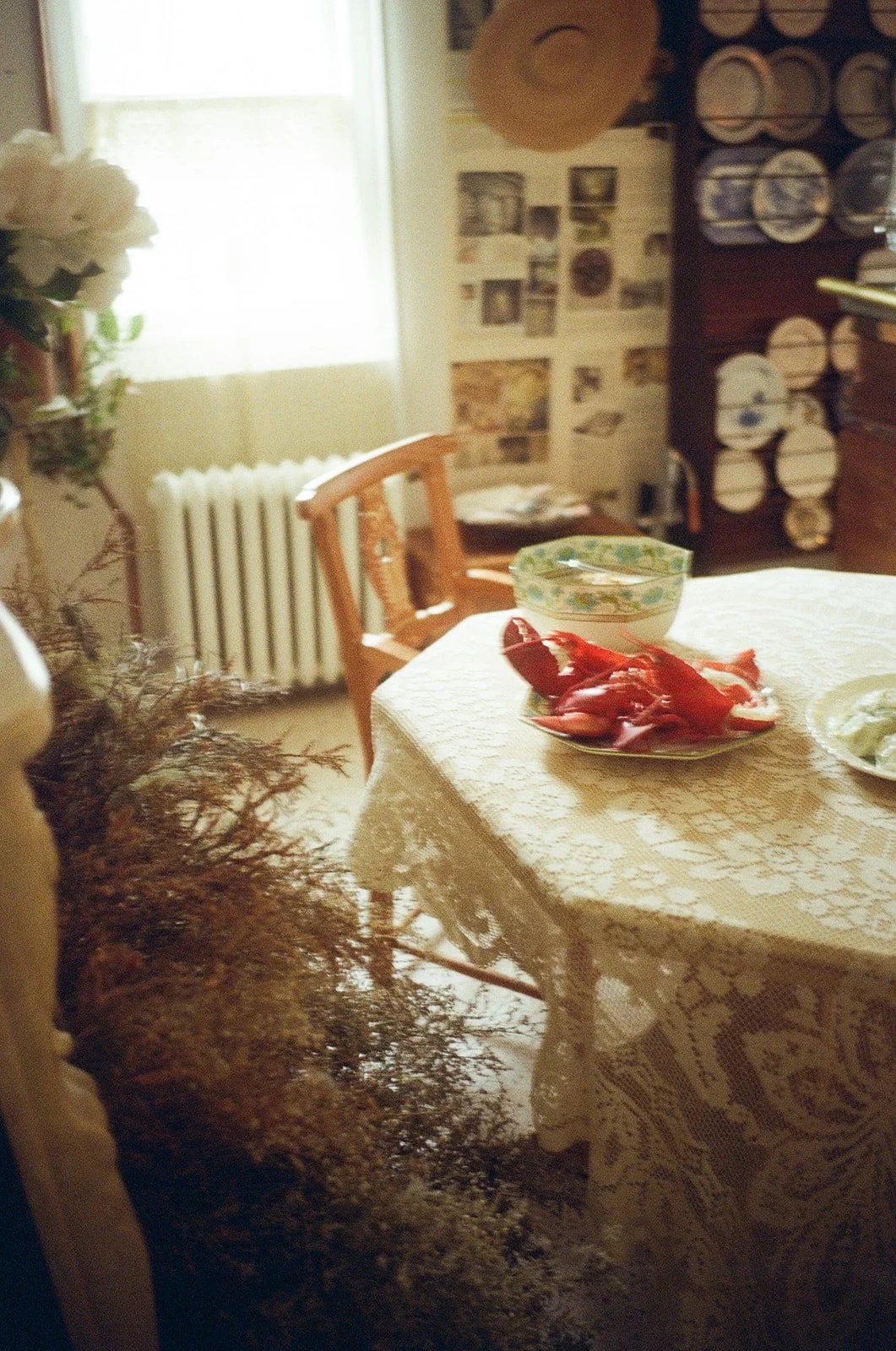
Our Spode Copeland tea service demonstrates the versatility of thoughtful tableware beyond its original purpose. Here, the cups are repurposed to serve a warm consommé alongside a lobster picnic, illustrating how enduring forms adapt naturally to contemporary rituals.
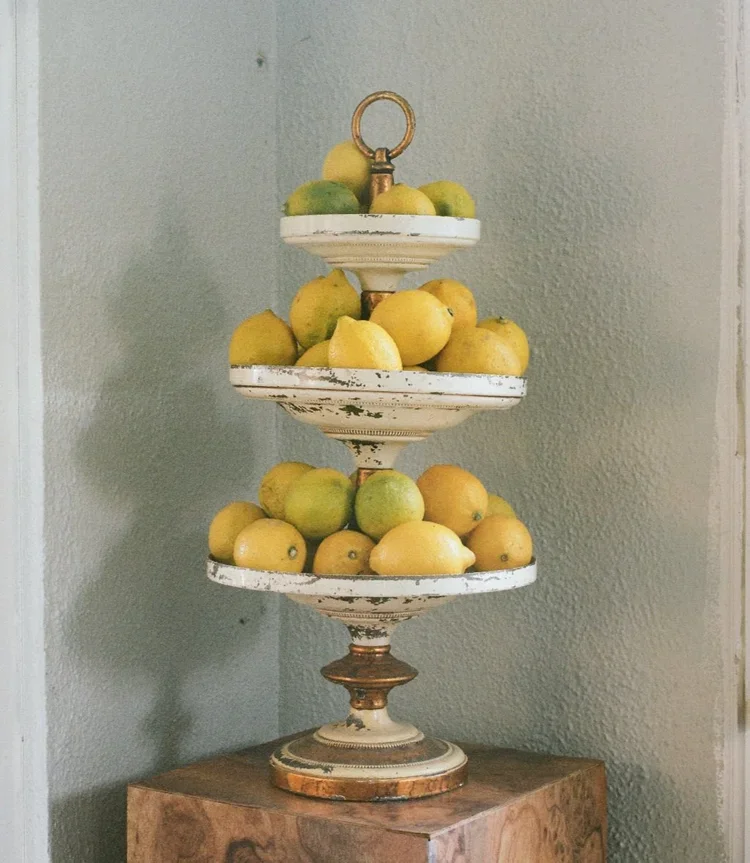
Our French tiered display stand reflects the tradition of elevating simple provisions through thoughtful presentation. Whether holding fruit or bread its tiered form lends quiet structure to the table, allowing everyday abundance to become part of the composition.
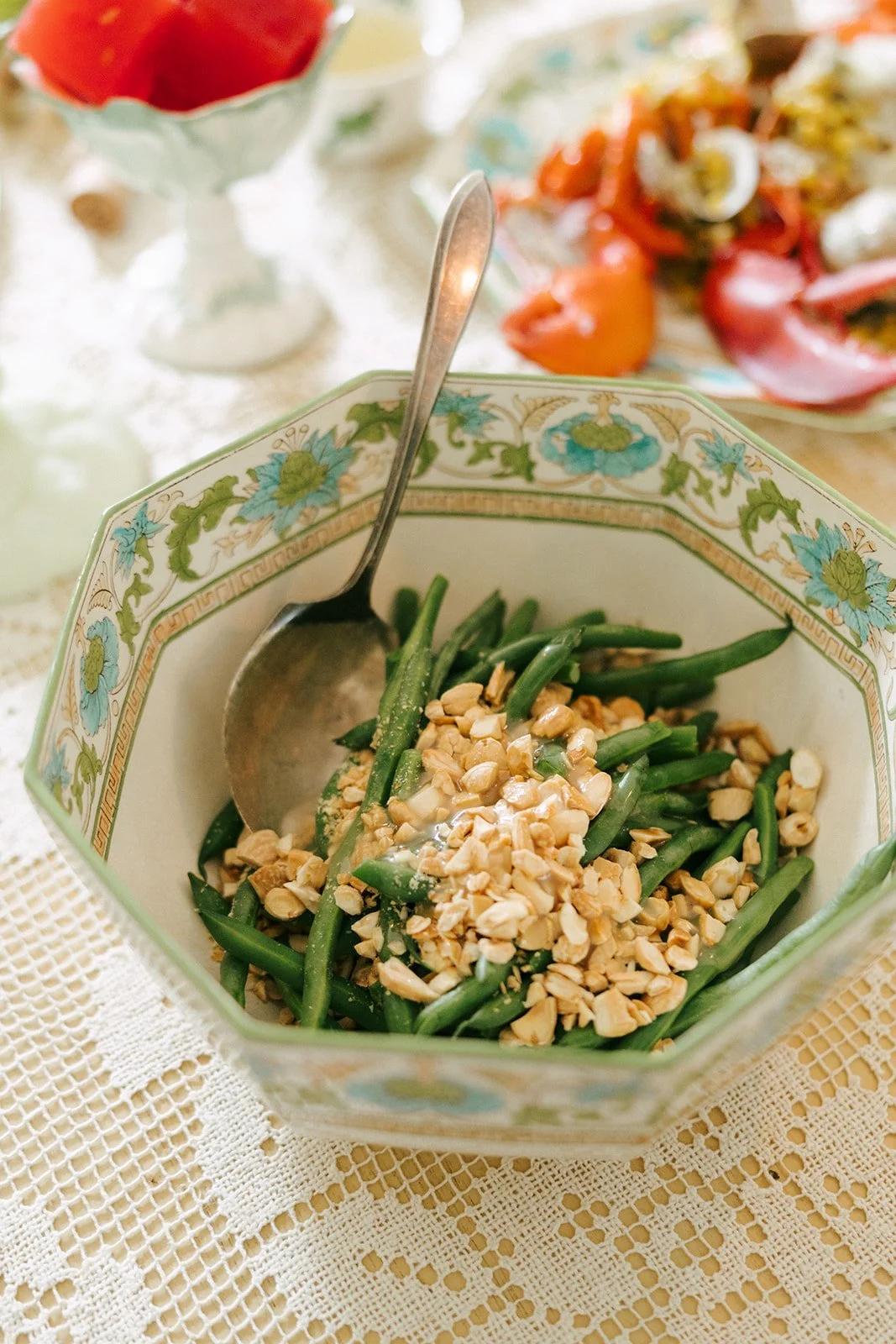
Our octagonal Wedgwood Formosa serving bowl frames a summer bean salad and the botanical border echoes the freshness of the season. Together, vessel and harvest celebrate the enduring relationship between thoughtful presentation and generous hospitality.
Our Rococo mirror reflects the expressive ornament of the period through scrolling forms and floral garlands. Positioned beside the dinner table, it gathers light and the rhythms of the meal into its composition, extending the atmosphere beyond the table itself.
ABOUT THiS COLLECTION

An 1860s English Copeland Majolica green platter is a fascinating piece of Victorian-era ceramics. From WT Copeland & Garrett pottery in Stoke-on-Trent, Staffordshire England, a handled server, circa 1860-1875. Glazed in a deep, luscious green, showing an overlapping leaf pattern with twig form handles. Serrate edging, in perfect condition. One of a few shapes produced in this pattern, this is the rectangular example. Beautiful mold work with nicely pooled glazing with a light iridescence.
-Size: 8.5ʺW × 11.75ʺD × 2ʺH
-Materials: majolica ceramic
-Provenance: 19th Century
-Made in: England
-Marked: Impressed Copeland & Garrett, New Fayence, 25
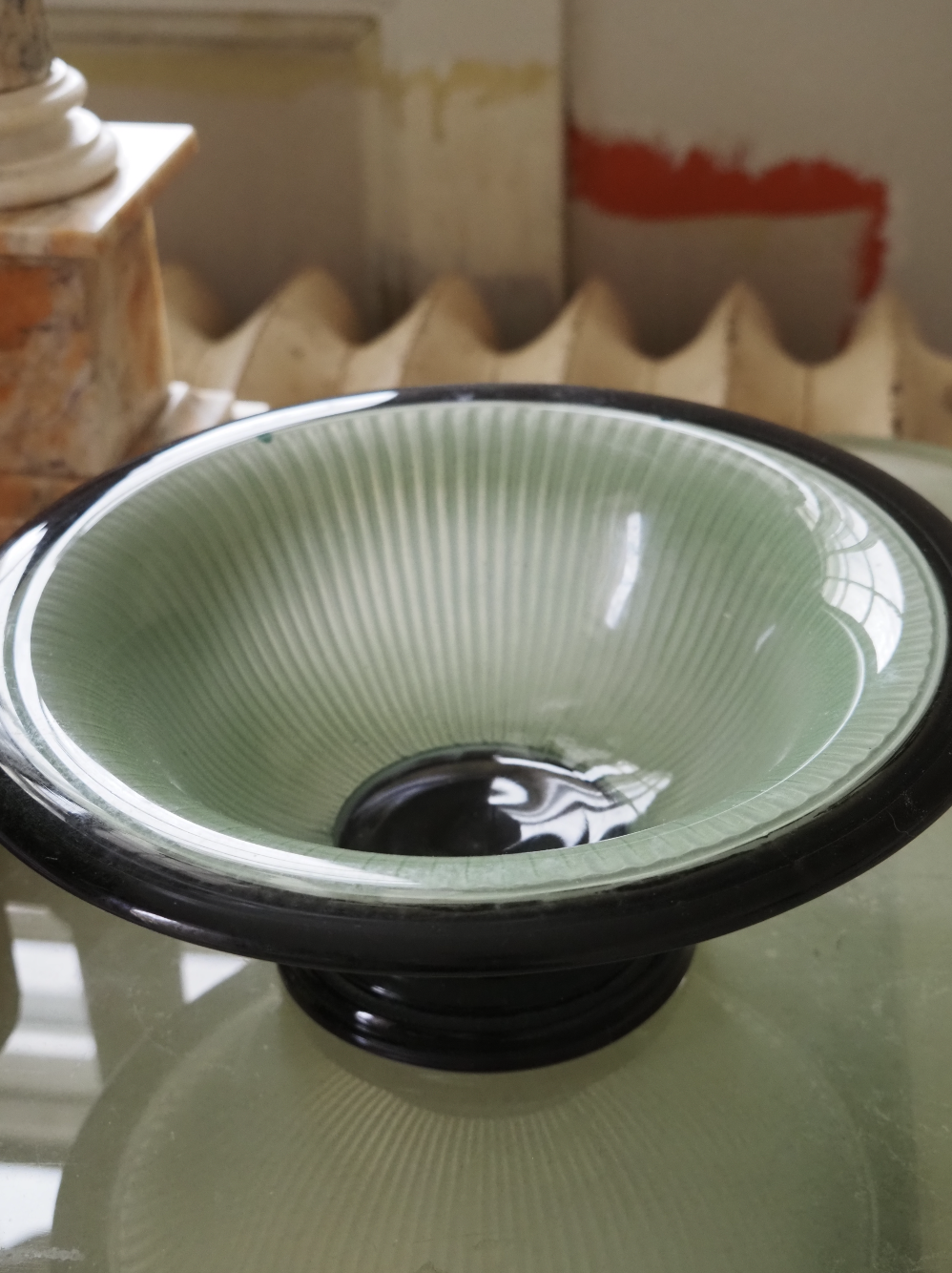
This Art Deco glass bowl reflects the period’s emphasis on geometry and repetition, with a fluted form that radiates outward in a controlled rhythm. The vertical ridges articulate the surface, allowing light to move across the bowl and create alternating bands of highlight and shadow.
-Size:
-Materials: glass
-Provenance: Art Deco period, early 20th century
-Made in: USA
-Notes: light wear consistent with age; minor surface variations typical of pressed or molded glass production

Celebrate the legacy of French provincial craftsmanship with this Antique Jaspe Pottery bowl, a storied piece from the Savoie region dating to the late 19th–early 20th century. Named for its resemblance to jasper stone, Jaspé pottery was an essential part of everyday rural life, valued for both its durability and its distinctive marbled patterns that speak to centuries of tradition in French country pottery.
-Size: 9in Dia
-Materials: pottery
-Provenance: late 19th–early 20th century
-Made in: France, Savoie region
-Notes:
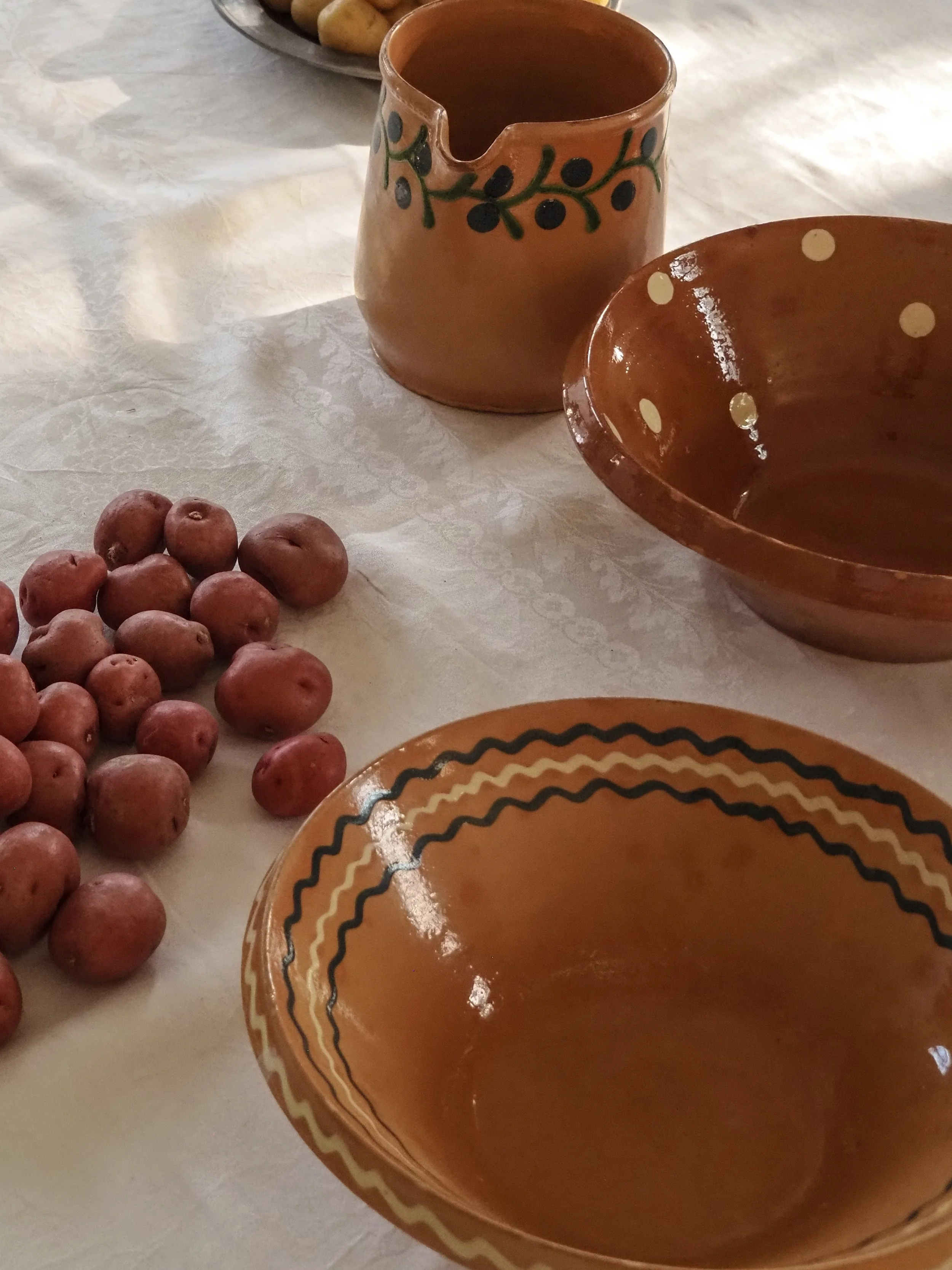
Celebrate the legacy of French provincial craftsmanship with this Antique Jaspe Pottery bowl, a storied piece from the Savoie region dating to the late 19th–early 20th century. Named for its resemblance to jasper stone, Jaspé pottery was an essential part of everyday rural life, valued for both its durability and its distinctive marbled patterns that speak to centuries of tradition in French country pottery.
-Size: 11in Dia
-Materials: pottery
-Provenance: late 19th–early 20th century
-Made in: France, Savoie region
-Notes:

This elegant table linen set features a double damask weave in Irish linen, showcasing the intricate craftsmanship characteristic of mid-20th century Irish textile production. The "Meadow Bleach" pattern is distinguished by its subtle tonal variations and refined geometric motifs, reflecting the period's appreciation for understated luxury.
-Materials: Irish linen, double damask weave
-Dimensions: Tablecloth: 72 × 96 inches
-Condition: New with tags, unused
-Provenance: Ireland, mid-20th century
-Notes: Hand-hemmed edges, original packaging

Crafted from high-quality ceramic, the artichoke tea pot is not only a conversation starter but also a practical addition to any tea lover’s collection. It combines aesthetic appeal with functionality, making it both a decorative piece and a useful item for serving tea.
-Size: 6" x 5"
-Materials: ceramic
-Provenance: unknown
-Made in: unknown
-Notes: n/a
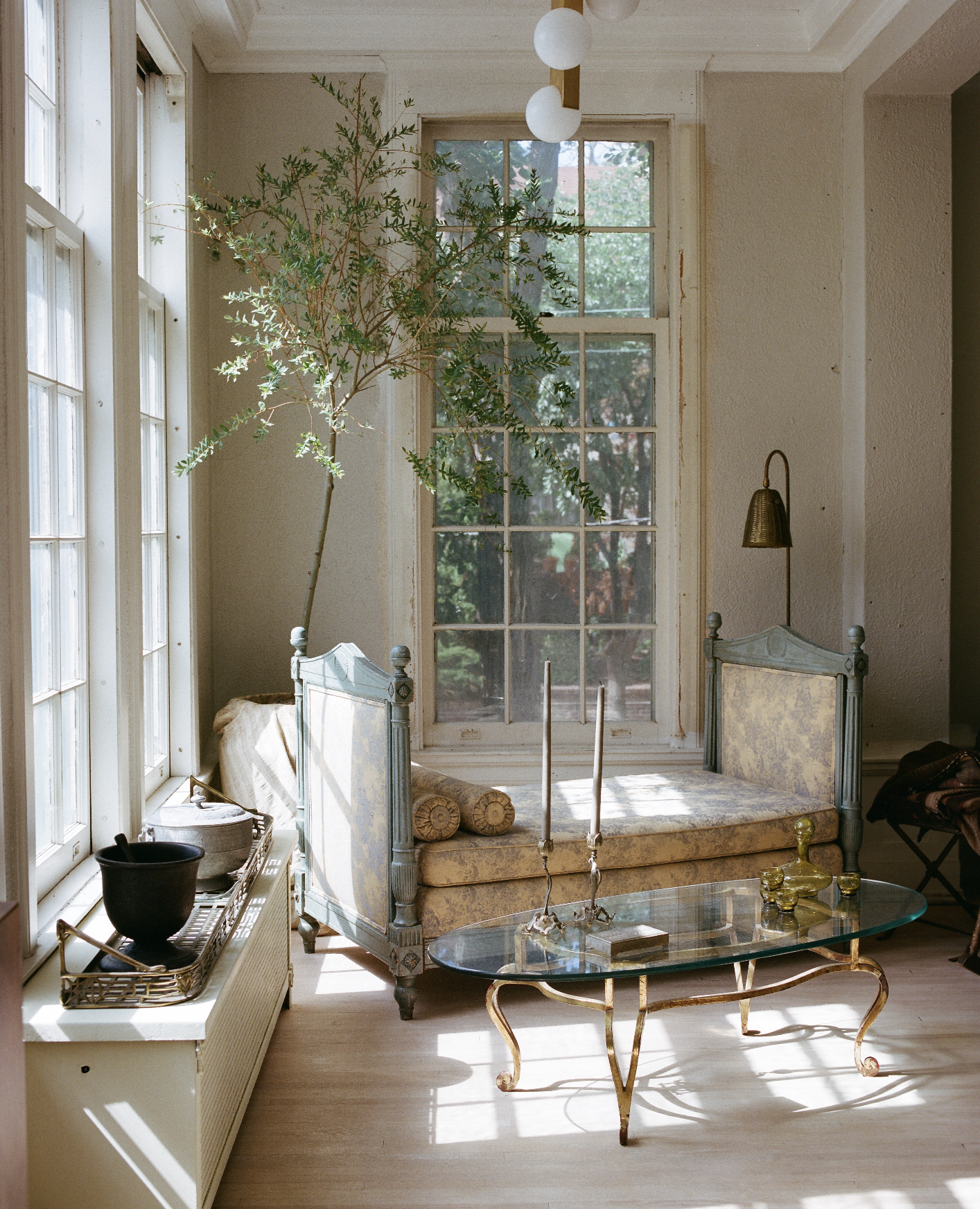
This daybed exemplifies the refined elegance of the French Directoire period, characterized by clean lines, restrained ornamentation, and classical proportions. The frame, executed in period style, is complemented by later Fortuny fabric upholstery, known for its rich colors and luxurious hand-printed textile designs. The combination of historic craftsmanship and high-quality textile illustrates the continued appreciation and adaptation of period furniture for decorative and functional use.
-Size:
-Materials: wood frame, antique Fortuny fabric upholstery
-Provenance: France, late 18th–early 19th century (upholstery later)
-Notes:
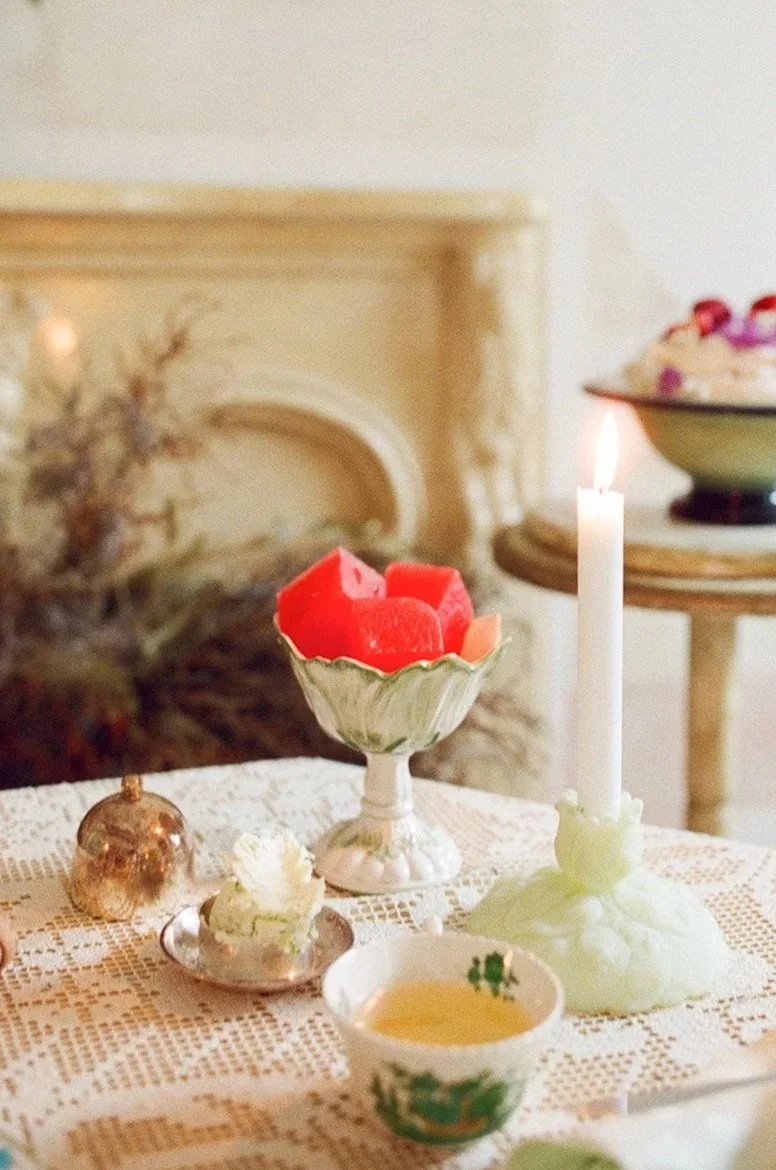
This Italian majolica pedestal celebrates the playful naturalism and vibrant glazing techniques characteristic of traditional ceramic craftsmanship, its sculpted lettuce leaves rendered with rhythmic folds and richly layered color. The pedestal form elevates the botanical motif, allowing the interplay of texture, glaze, and shadow to create a striking sculptural presence. Evocative of Italy’s long-standing tradition of ornamental pottery, the piece merges whimsy with artisanal precision, transforming a functional stand into a lively decorative object.
-Size: 5.5"H x 5.5"W
-Materials: majolica
-Provenance: unknown
-Made in: Italy
-Notes:
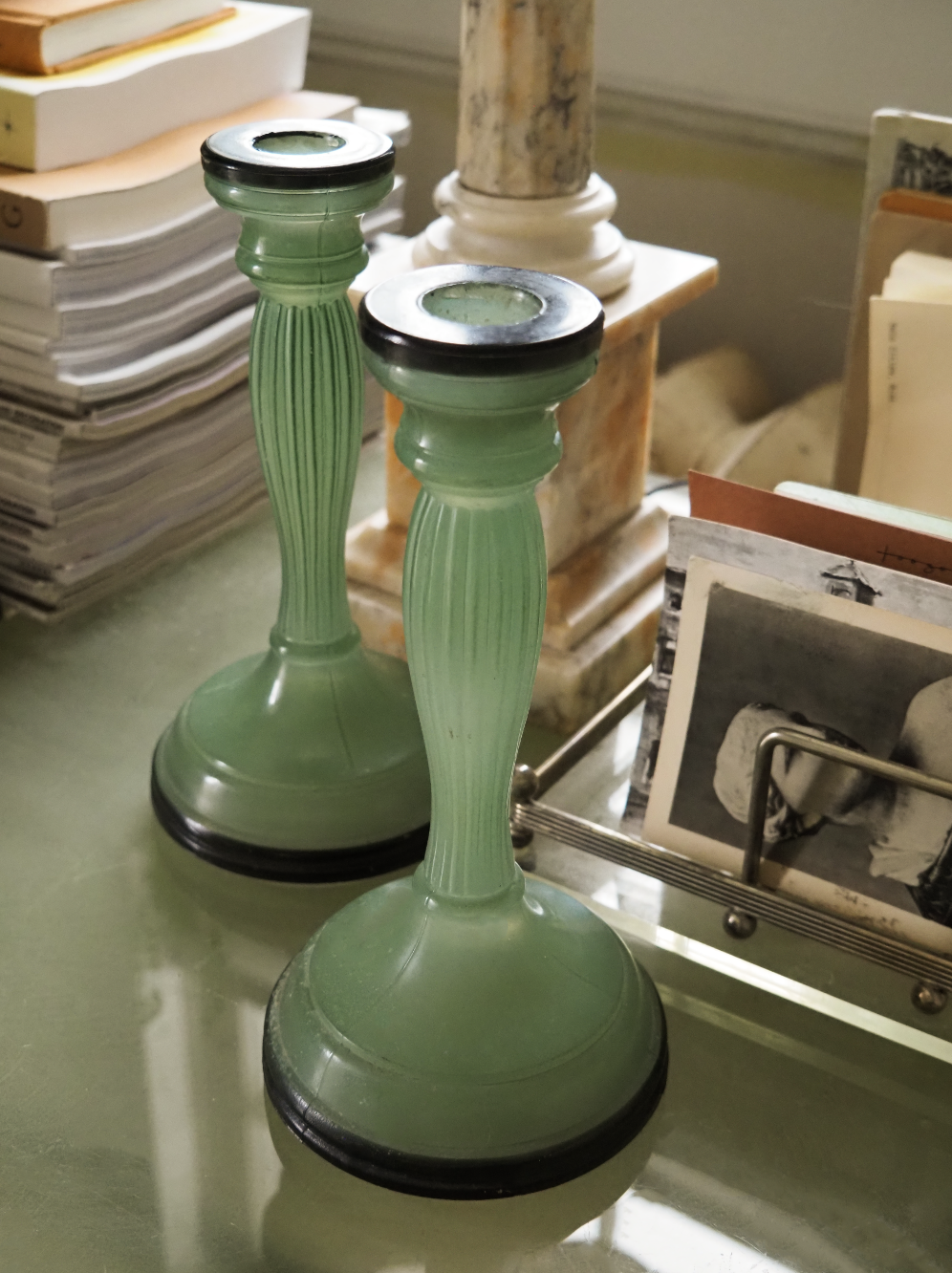
This Art Deco pair of candlesticks reflect the period’s emphasis on geometry and repetition, with a fluted form that radiates outward in a controlled rhythm. The vertical ridges articulate the surface, allowing light to move across the forms and create alternating bands of highlight and shadow.
-Size: 10”H
-Materials: glass
-Provenance: Art Deco period, early 20th century
-Made in: USA
-Notes: light wear consistent with age; minor surface variations typical of pressed or molded glass production

This set exemplifies the tradition of Irish linen craftsmanship, featuring a double damask weave with a stylized floral pattern. Produced in mid-20th-century Ireland, the tablecloth and accompanying twelve napkins reflect the period’s emphasis on refined domestic textiles, combining durability with aesthetic elegance. The hand-hemmed edges and meticulous weaving demonstrate the artisanal skill inherent in Irish linen production, making this ensemble both a functional and decorative object in the domestic sphere.
-Size: 72in x 96in; napkins 22inx22in
-Materials: Irish linen, double damask weave
-Provenance: mid-20th century
-Made in: Ireland
-Notes: made for Dayton’s Department Store, Minneapolis
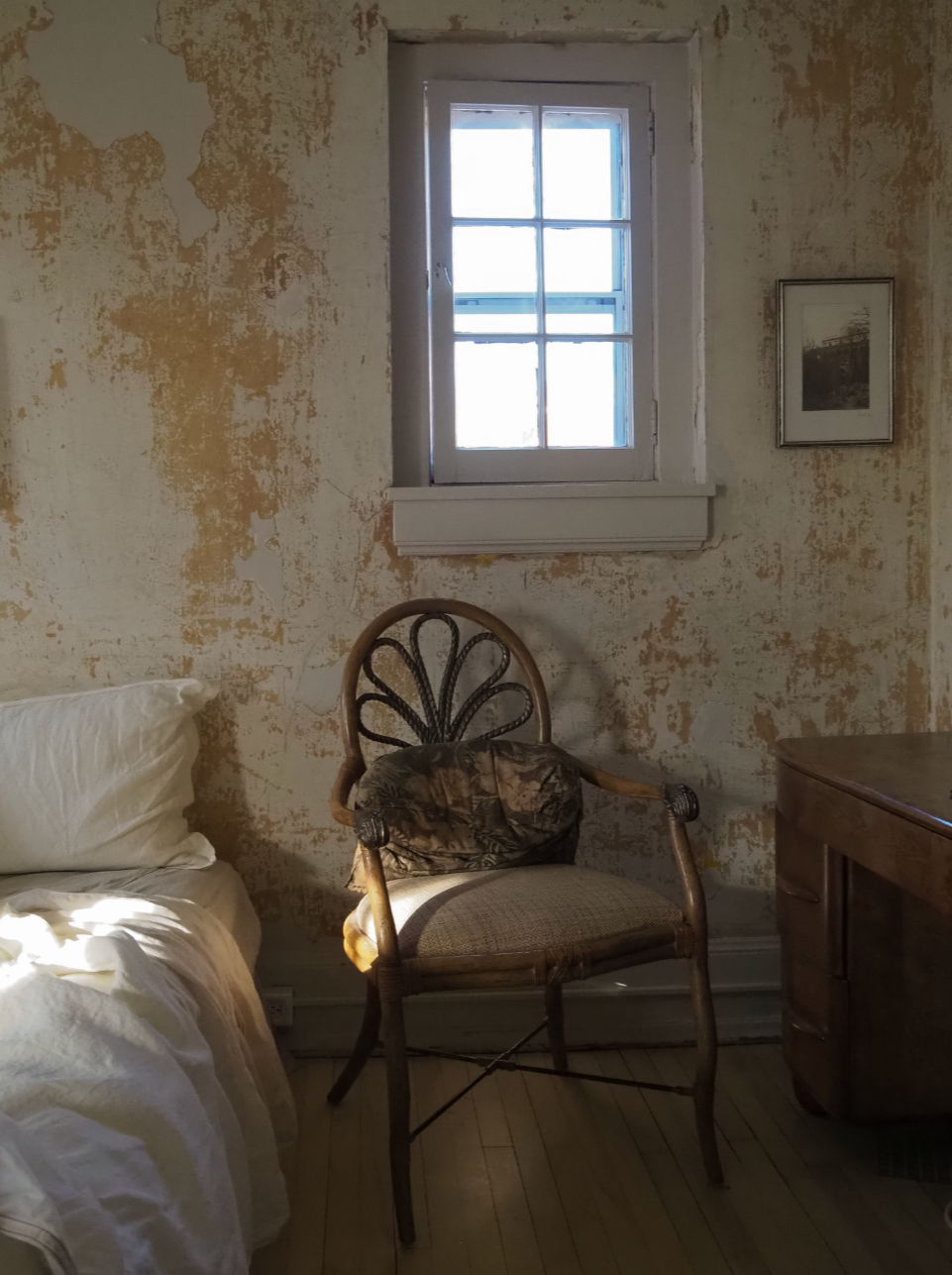
This vintage Italian chair combines refined carved detailing with a poised architectural presence, its sculptural frame articulating both decorative and structural elements. The carved wood evokes the rich tradition of Italian furniture craftsmanship, where articulated surface and form were central to design expression. Upholstered for comfort and accented with a nickel finish, the chair balances historic influence with a tailored aesthetic, making it a distinctive seating piece for interiors that value both heritage and subtle refinement.
Size: 40.5"H x 20" seat height x20" seat depth x 26.5" arm height x 24.5"W
Materials: nickel finish, wood + upholstery
Provenance: vintage
Made in: n/a
Notes:
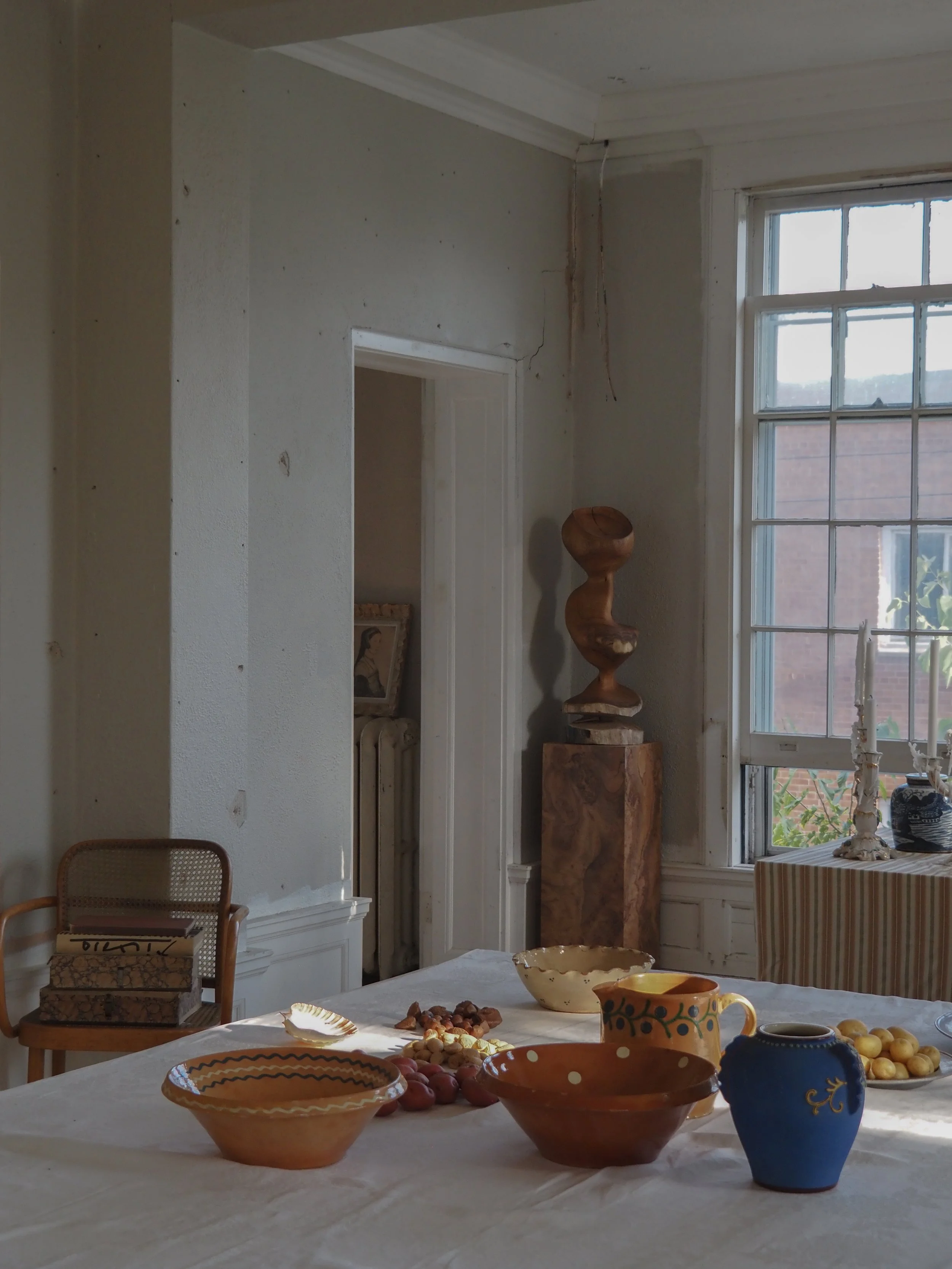
Celebrate the legacy of French provincial craftsmanship with this Antique Jaspe Pottery Pitcher, a storied piece from the Savoie region dating to the late 19th–early 20th century. Named for its resemblance to jasper stone, Jaspé pottery was an essential part of everyday rural life, valued for both its durability and its distinctive marbled patterns that speak to centuries of tradition in French country pottery.
-Size: 6.5"H x 8.5" W
-Materials: pottery
-Provenance: 19th Century
-Made in: France
-Notes:
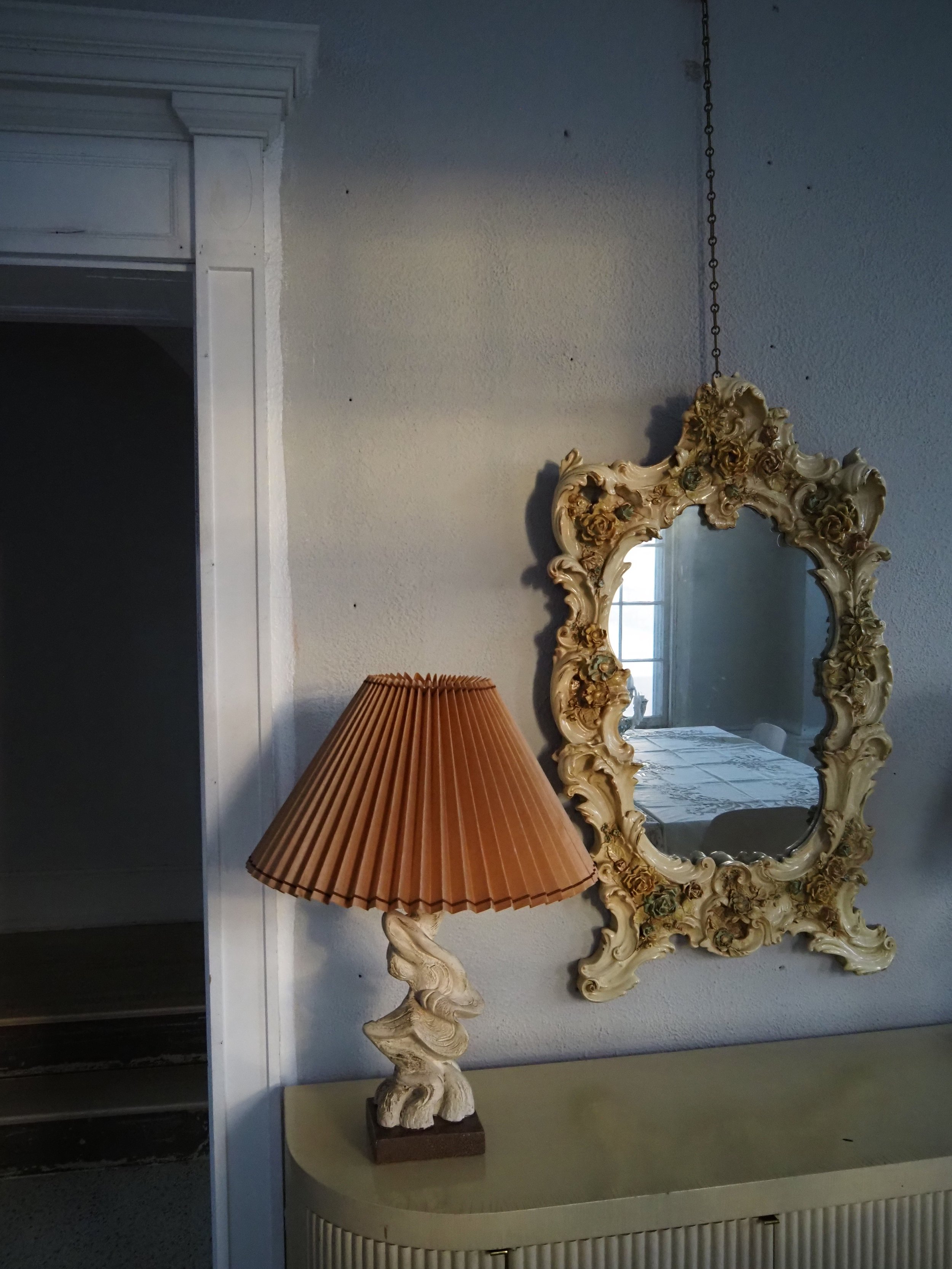
A sculptural Italian mirror defined by its exaggerated Rococo silhouette and flowing ornamental form.
Produced in Italy in the mid-20th century, the frame reflects a period of decorative reinterpretation, where classical motifs were translated into lighter, more expressive materials. The surface carries a subtle variation in tone, emphasizing depth across the carved forms and lending the piece a sense of movement.
Rather than functioning solely as a reflective surface, the mirror reads as a wall-mounted object — its presence shaped as much by outline and shadow as by reflection.
Ideal for entryway, bedroom, or above-console placement, the piece introduces a strong vertical gesture within a space.
Size: approx. 26" x 45"
Materials: Molded composite frame with a sculptural, hand-finished surface.
Provenance: 1960s
Made in: Italy
Notes: expressive, sculptural frame with fluid contouring; lightweight construction typical of vintage molded fiberglass; surface variation consistent with age and production method.

This artichoke-form vessel highlights the sculptural whimsy and natural inspiration often found in decorative ceramics, its layered leaves rendered with rhythmic precision. The cracked glazing introduces an added dimension of visual depth, allowing fine fissures to accentuate the contours and create a subtle interplay between texture and light. The piece embodies the union of organic motif and artisanal technique, resulting in a vessel that is both functional and sculpturally evocative.
-Size: 12.5"H x 8"W x 6"D
-Materials: ceramic
-Provenance: unknown
-Made in: unknown
-Notes: cracking in glaze, appropriate with age
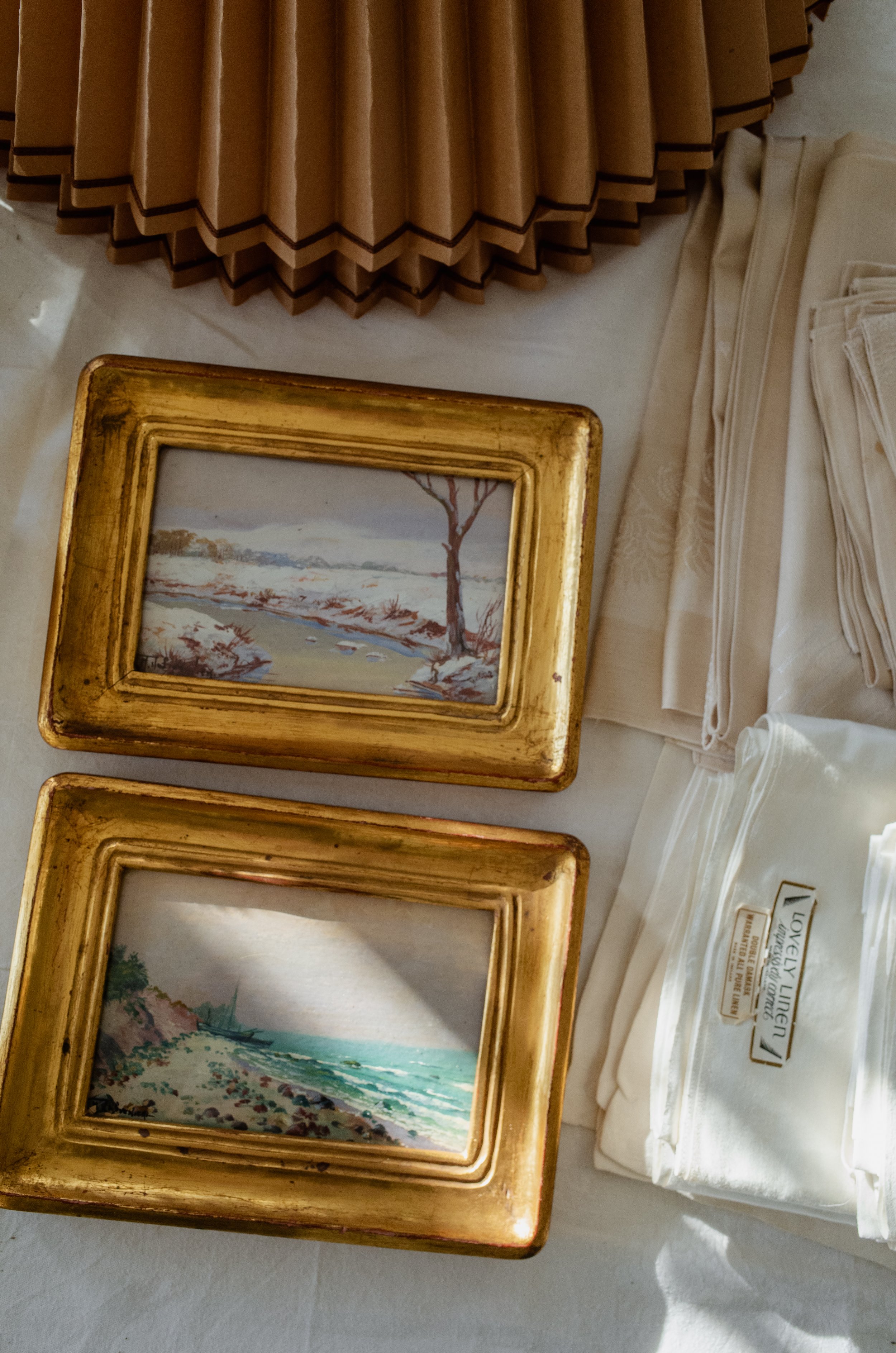
This pair of oil on board paintings reflects a studied approach to composition and surface, where gesture and layering define the visual field. Presented together, the pair reads as a cohesive study in variation, where differences in mark-making and tone create a quiet dialogue between the two works.
Size:
Materials: oil on board
Provenance:
Signed: yes
Notes: minor surface wear consistent with age; variations in brushwork and tone are inherent to the medium
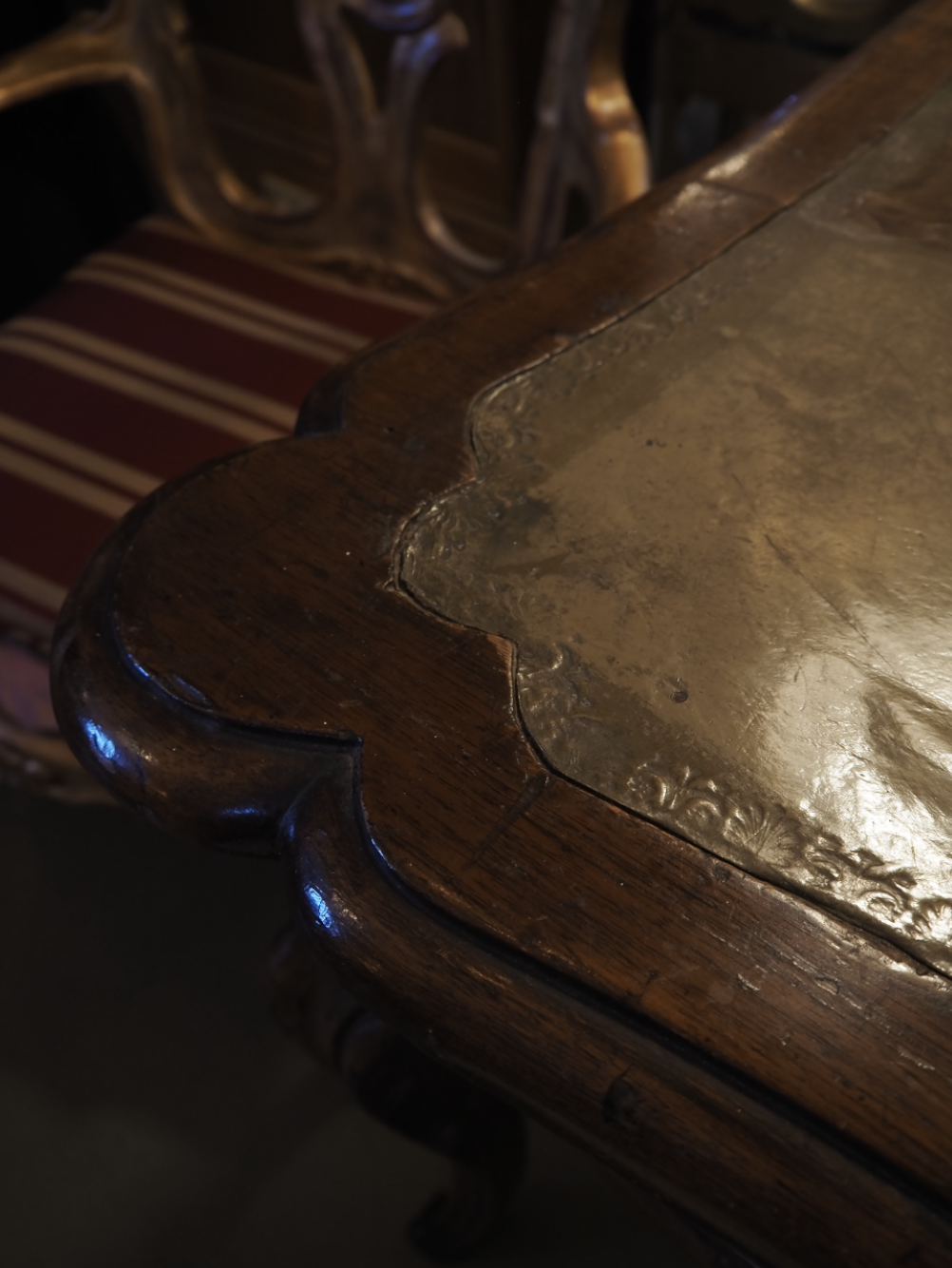
This French Louis XV writing desk reflects the period’s emphasis on fluidity and ornament, with a hand-carved structure defined by curved lines and integrated decorative detail. The surface provides a controlled plane against the carved base, allowing the interplay between ornament and proportion to remain balanced. Carving is used not as applied decoration, but as an extension of the form itself, reinforcing the desk’s sculptural quality.
Size:
Materials: hand-carved wood
Provenance: 18th century, Louis XV period
Made in: France
Notes: wear consistent with age and use; surface variation and patina contribute to the depth of the carving and overall character
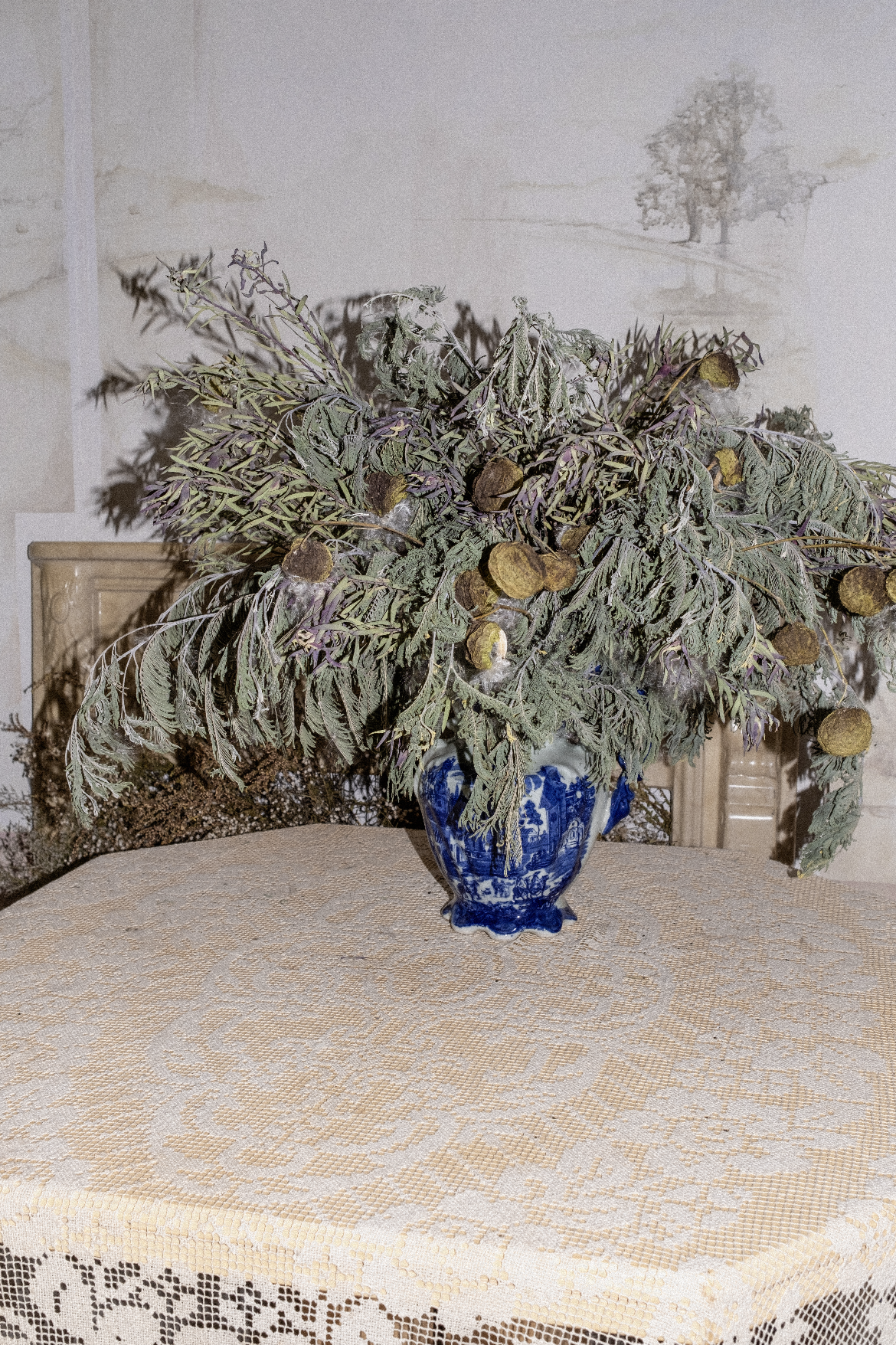
This Victoria Ware ironstone pitcher from the 1850s reflects the durable elegance and refined utility characteristic of mid-19th-century English ceramic production. Its balanced proportions, molded detailing, and softly lustrous surface embody the period’s interest in creating household vessels that combined practicality with decorative charm. The piece stands as a testament to the popularity of ironstone during the Victorian era, when its strength, affordability, and aesthetic adaptability made it a staple in domestic settings.
-Size: 12"H x 11"W
-Materials: ironstone
-Provenance: 19th century, Victorian England
-Made in: United Kingdom
-Notes: n/a
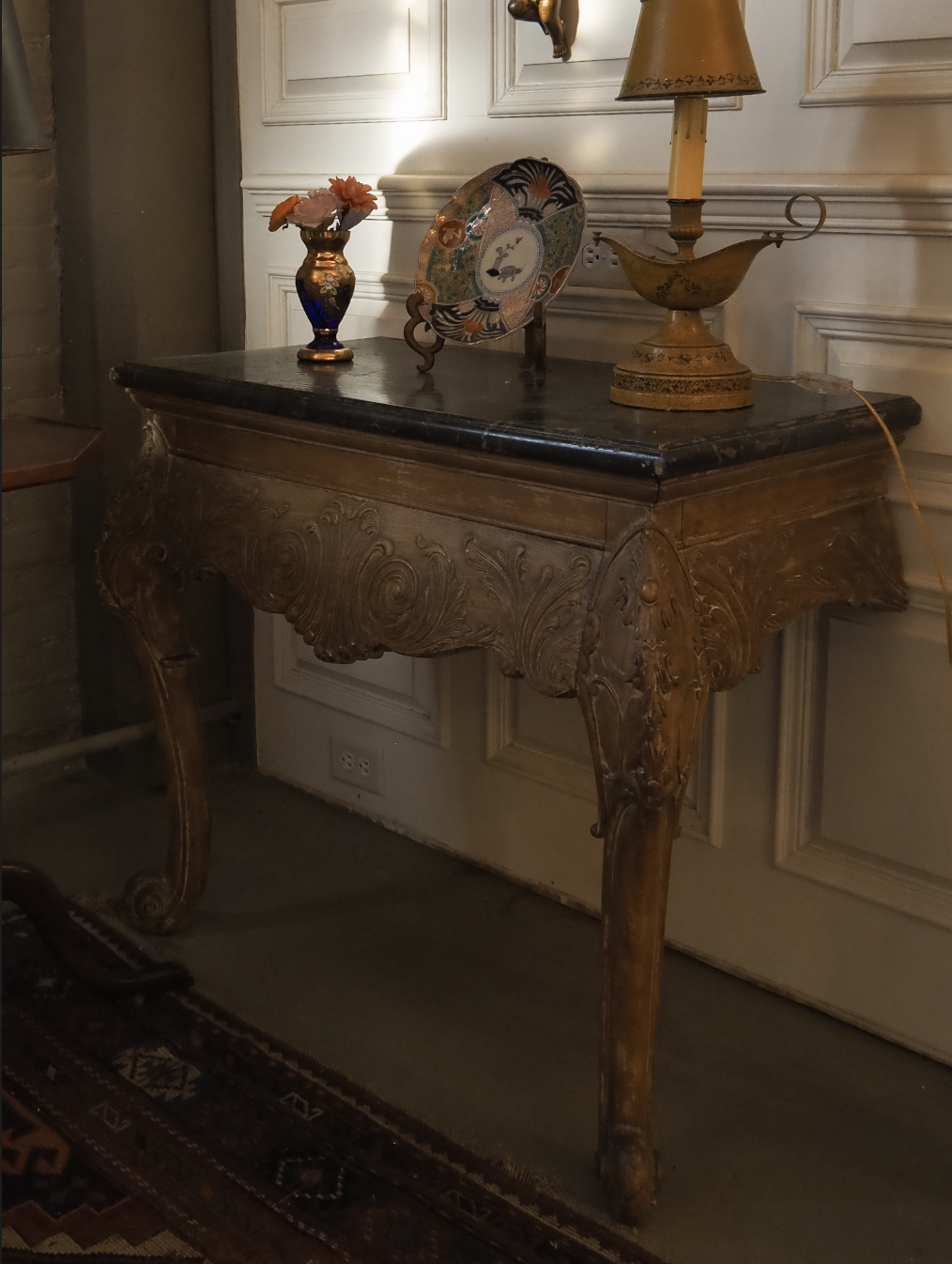
This suspended Rococo-style console table showcases the graceful movement and ornament associated with 18th-century design traditions. The hand-carved cabriole legs lend sculptural elegance to the form, while the faux marble top introduces a refined decorative surface protected by a custom-cut glass overlay. Designed to mount against the wall for support, the table achieves a light, architectural presence that allows its curving silhouette to stand out. The piece offers both visual drama and functional versatility, making it particularly suited for entryway display.
-Size: approx.
-Materials: carved wood, faux marble painted surface, glass top
-Provenance: mid–20th century
-Made in:
-Notes: suspended design requires simple wall brace installation; faux marble top shows minor age-consistent wear; protective glass top included.
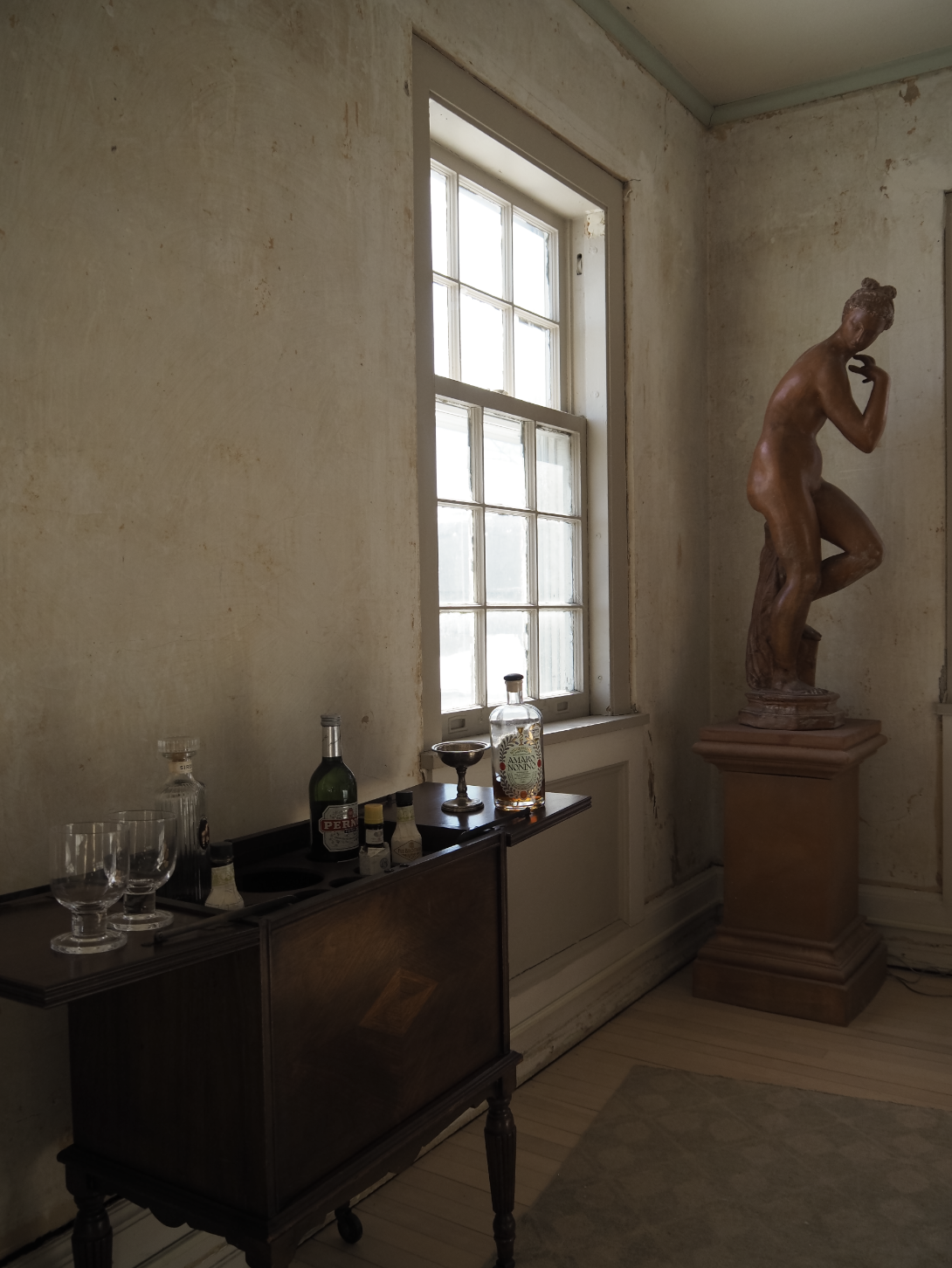
This Art Deco cocktail bar cabinet exemplifies the ingenuity and elegance of 1920s furniture design, combining compact form with clever mechanical function. A double-lid construction opens while lifting the interior caddy, revealing organized compartments designed to accommodate bottles and glasses. Crafted from walnut and mahogany, the cabinet is further distinguished by an inlaid marquetry medallion on the front, a decorative flourish that underscores the period’s emphasis on craftsmanship and visual refinement. Restored to a satiny finish, the piece remains in excellent condition, offering both historical character and functional appeal.
-Size: 15inD x 23inW (closed); 44inW (open)
-Materials: walnut and mahogany with marquetry inlay
-Provenance: 1920s, Art Deco period
-Made in: United States
-Notes: double-lid mechanism lifts interior caddy; compartments designed for bottles and glasses; -professionally restored with a satiny wax finish.
Produced by Spode Copeland, this tea service reflects the enduring appeal of naturalistic tableware in English ceramics. Molded in the form of cabbage leaves, each cup and saucer is richly detailed with veining and softly glazed in layered greens, celebrating the Victorian fascination with botanical forms and the decorative possibilities of the dining table. The matching serving tray completes the set, creating a cohesive presentation equally suited to afternoon tea or display.
Playful yet refined, the service exemplifies the tradition of transforming familiar garden subjects into finely crafted domestic objects. Whether used for entertaining or incorporated into an open shelving display, the set brings texture, color, and a sense of occasion to the table.
-Contents: five tea cups, five saucers, and matching serving tray
-Materials: glazed earthenware
-Manufacturer: Spode Copeland
-Made in: England
-Notes: molded cabbage leaf design with hand-finished glazing; complete service with coordinating tray; botanical form characteristic of late 19th- and early 20th-century English ceramics.
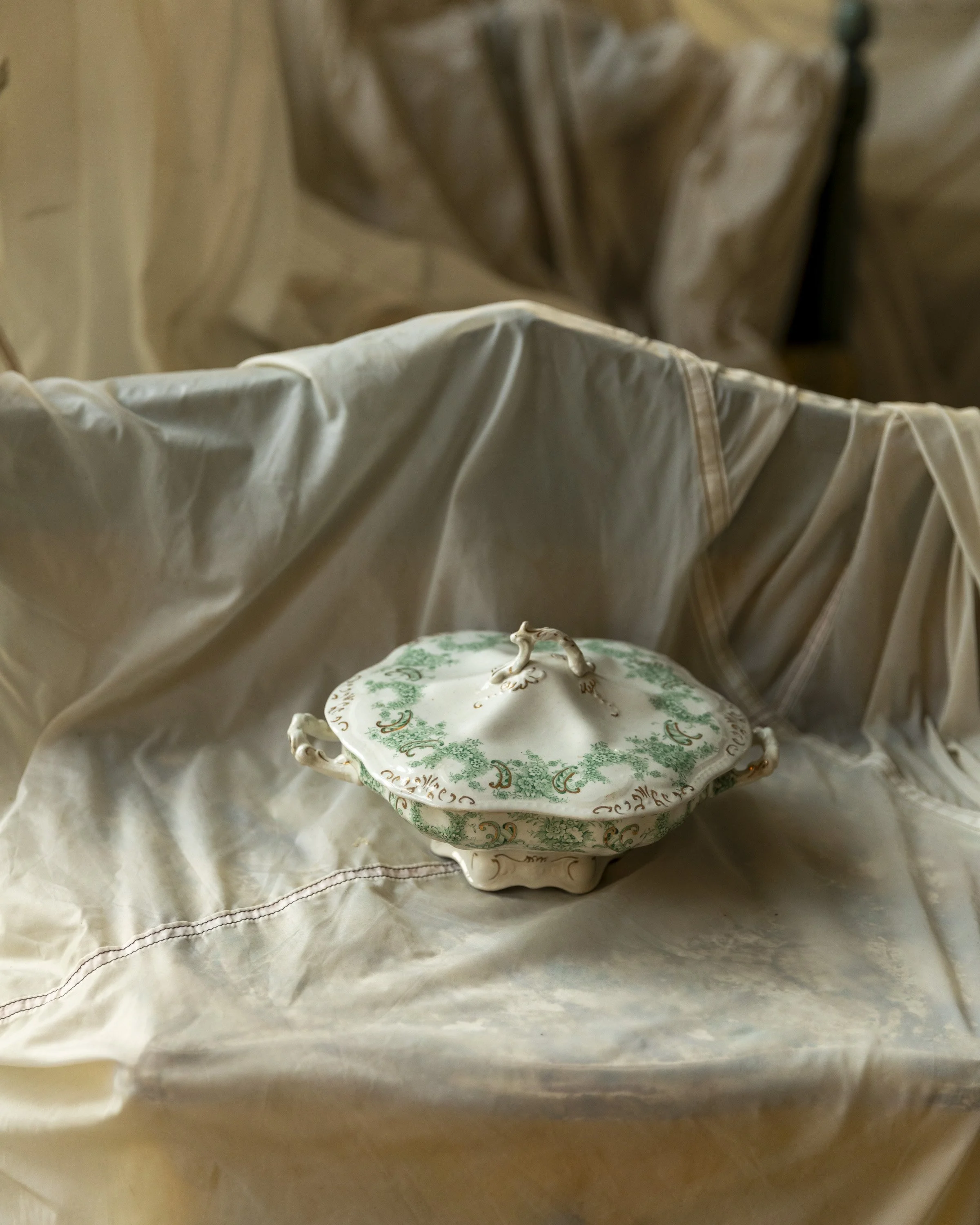
New Wharf Earthenware was an 19th century manufacturer at Stoke-on-Trent, England. The name was derived from the Wharf that was built on the nearby Burslem Branch of the Trent & Mersey canal at that time. This rare vegetable server in the pattern 'Nelson' is said to be named after a notable admiral.
-Size: 11" x 8.5"W
-Materials: earthenware
-Provenance: 19th Century
-Made in: England
-Notes: n/a
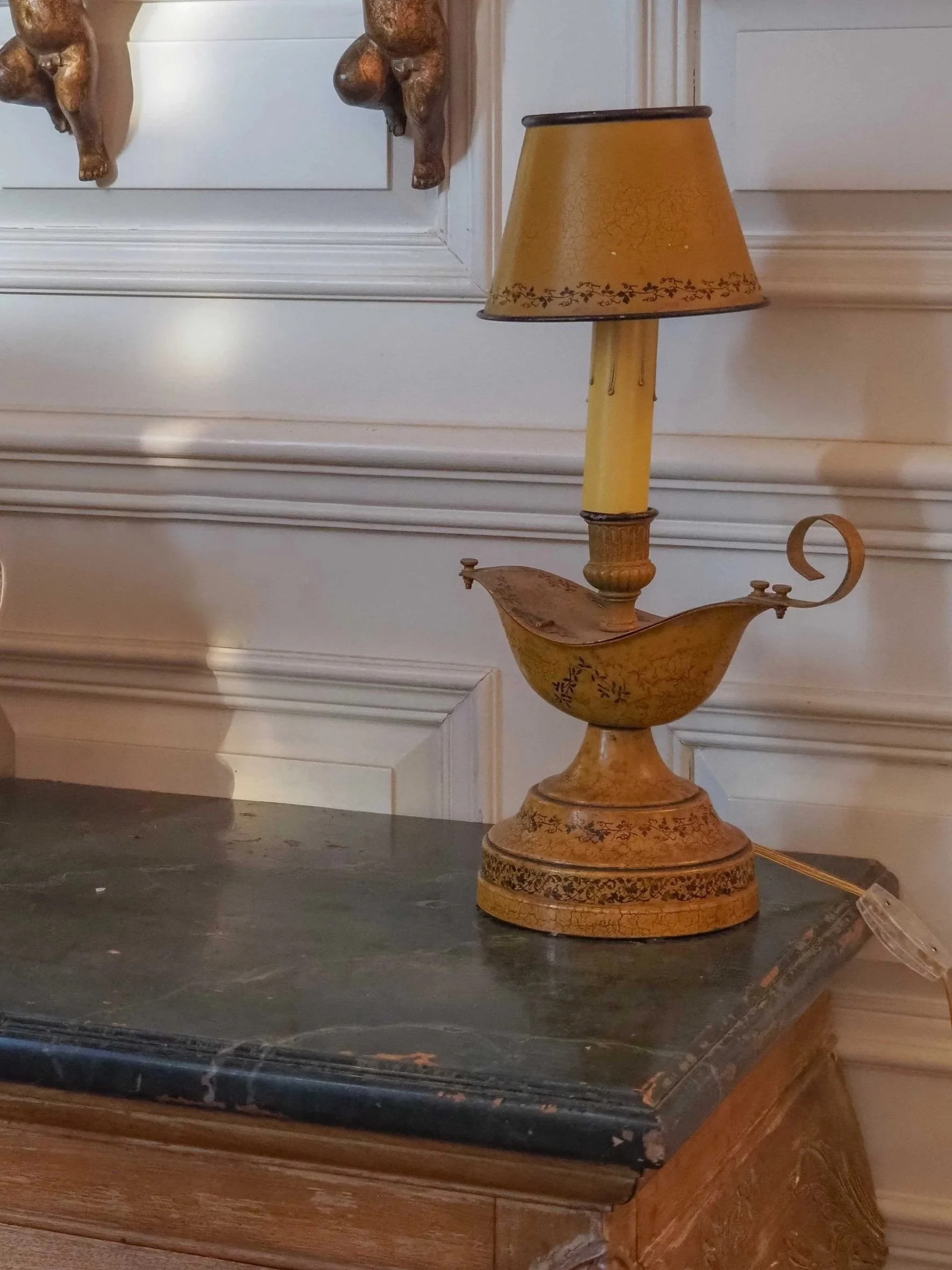
This vintage lamp highlights the decorative charm of traditional toleware, its mustard and black painted surface offering a warm contrast of tone and texture. The single-light form carries a quiet sculptural presence, while the aged patina enriches the character of the painted metal. Both functional and decorative, the lamp reflects a timeless approach to domestic lighting where color, material, and form are thoughtfully balanced.
Size: approx. 10ʺW × 6ʺD × 16.5ʺL
Materials: painted metal toleware
Provenance: vintage
Made in: Italy
Notes: single-light fixture with in-line cord on/off switch; surface patina consistent with age and use.
Explore PAST COLLECTIONS
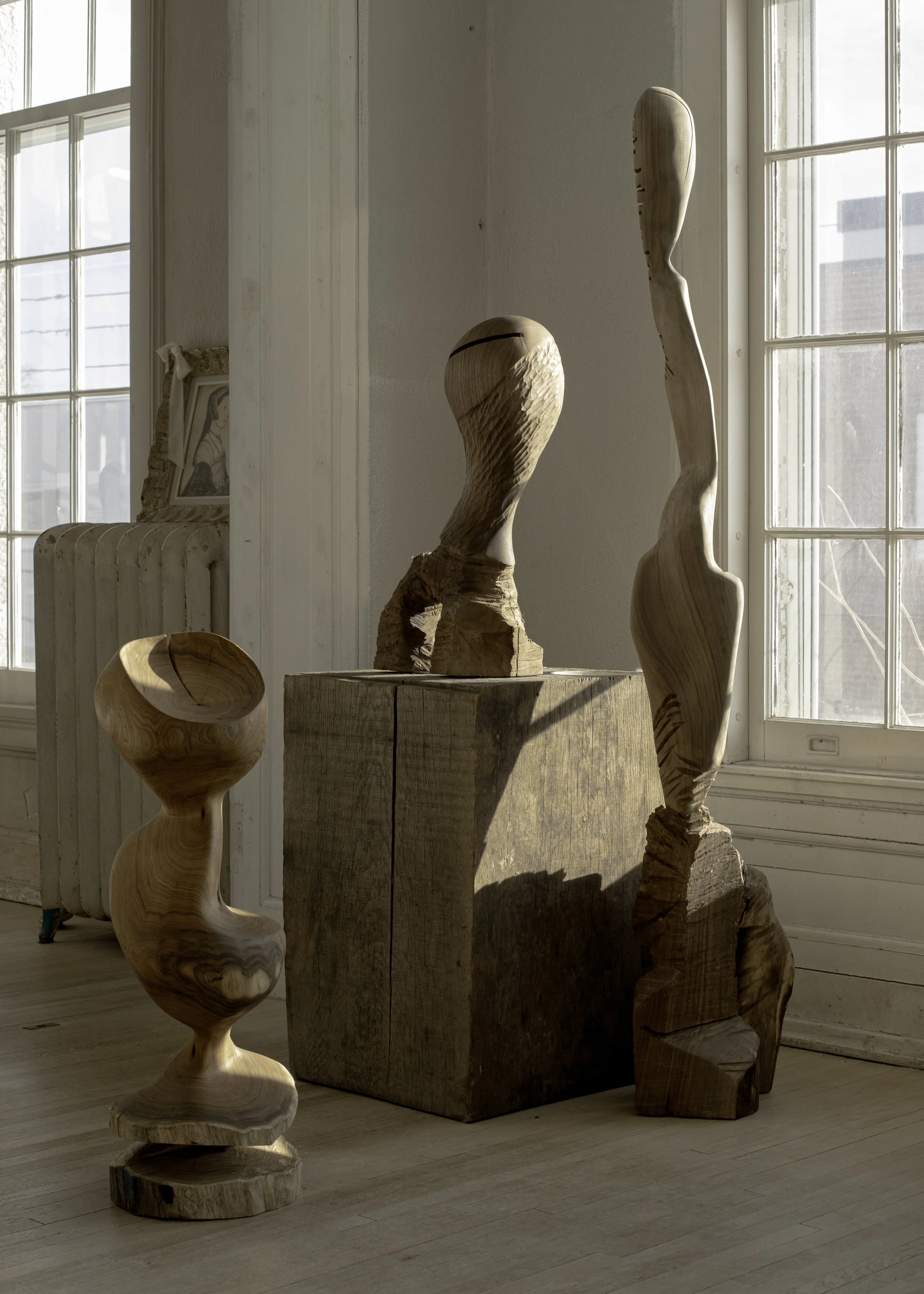
TIME IF THE FEELING OF BEING MADE
The capsule, entitled Time Is the Feeling of Being Made, is through a process of attunement; an intuitive collaboration between maker, material, and the forces that have acted upon it long before it enters the studio. Each sculpture becomes a marker of that continuum, a distilled moment in the ongoing life of the wood. See more here.
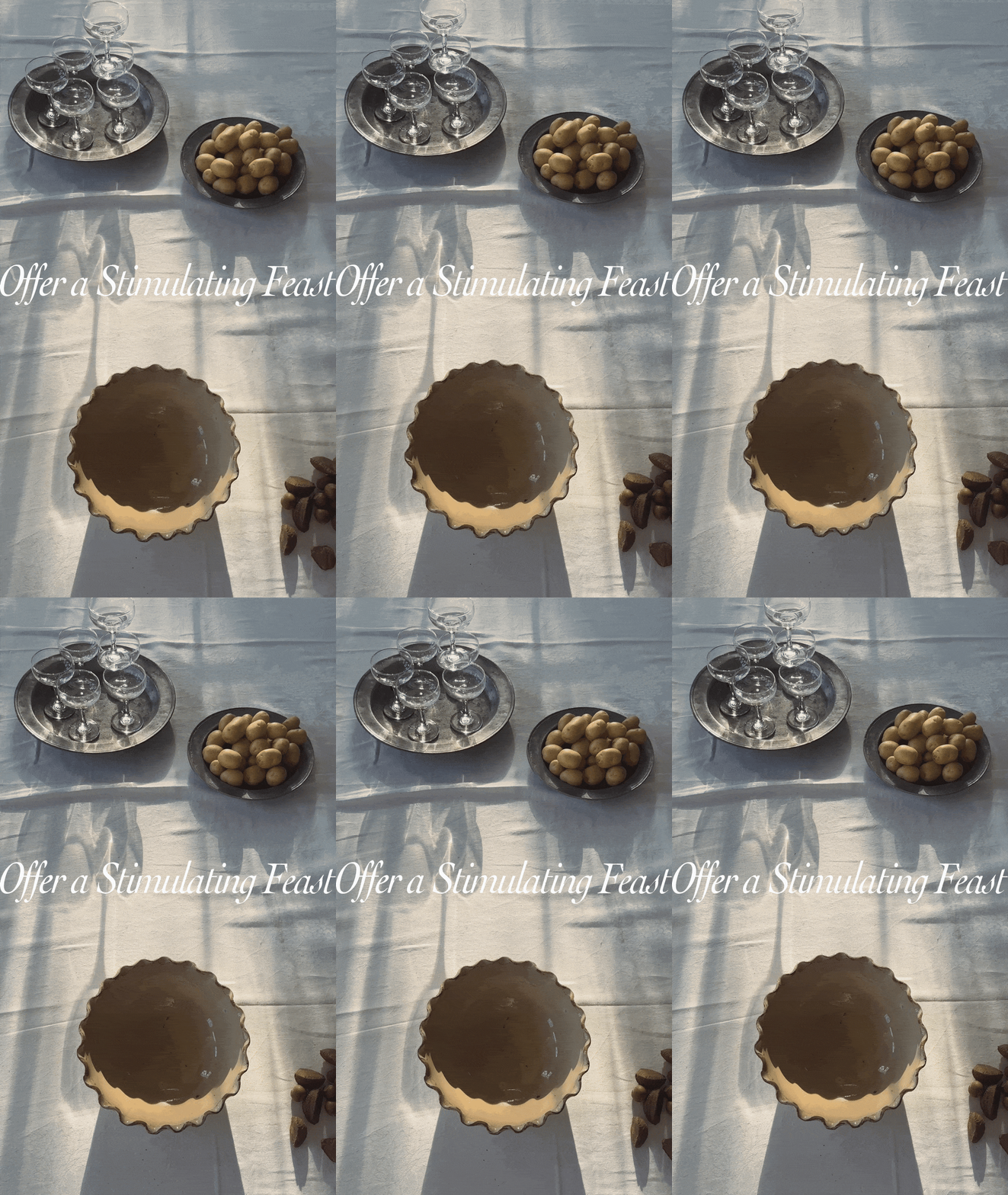
OFFER A STIMULATING FEAST
“Luxury can be a potato and an onion” said chef Francis Mallmann. For our most recent selection, we explore the the tension between new pieces and storied ones - where spaces feel gathered, not staged, the mature harvest brought inside, candlelight catching on glass and brass. Our perspective is simple, make the useful beautiful without polishing away where it came from. See more here.

UP THE STAIRS, TO THE RIGHT
As an exploration of the role of decorative arts within public + private space and celebrating the antiquarian alongside the contemporary, our shoppable assortment includes collectibles contextualized alongside 19th century antiques. See more here.