
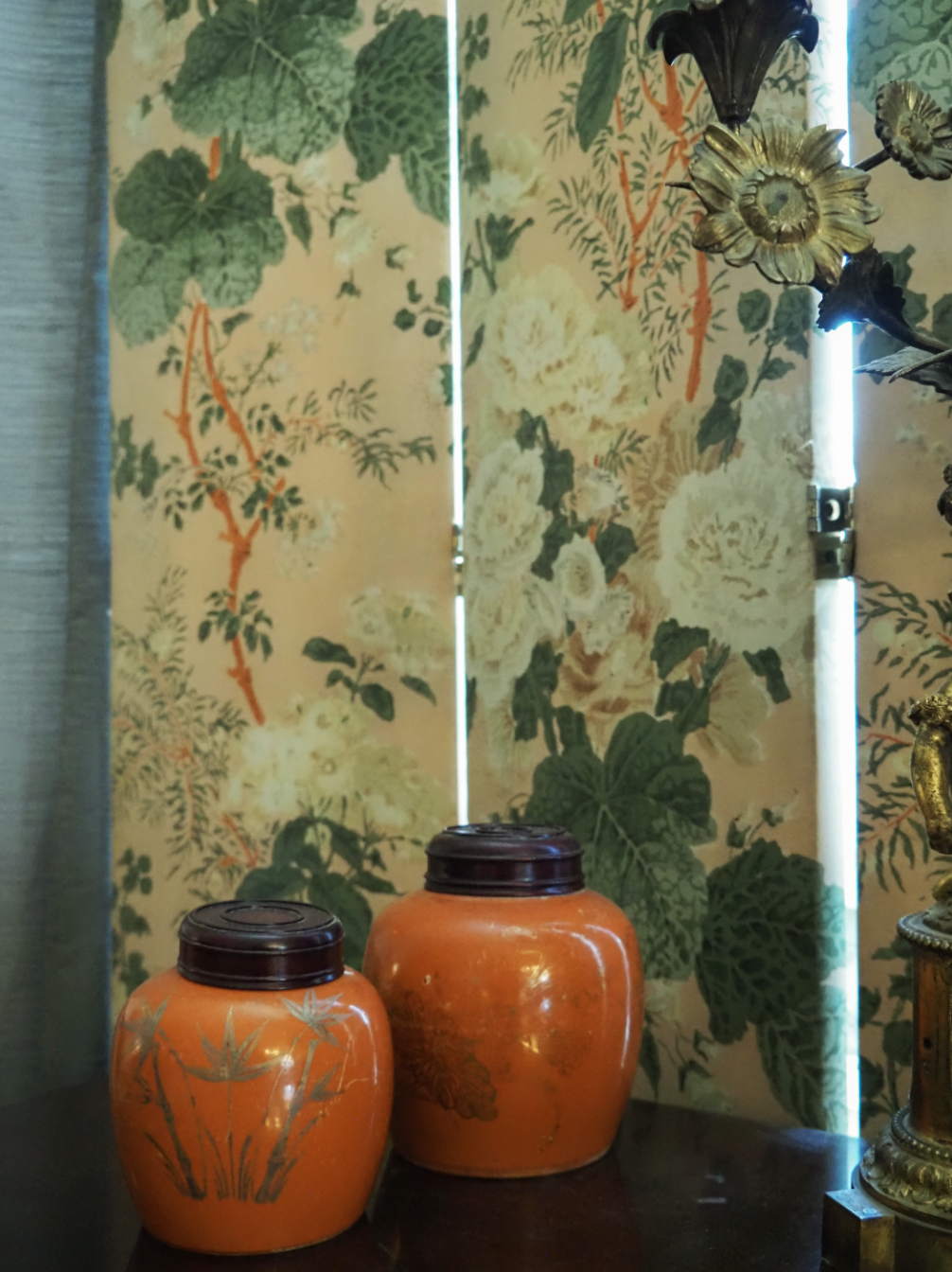
This pair of Chinese ginger jars reflects the enduring form associated with late 19th-century porcelain, defined by rounded bodies and contained proportions. The saturated orange glaze introduces a continuous field of color across each surface with gilt detailing.
Originally conceived for storage, ginger jars evolved into objects valued for their silhouette and presence within the interior. In this example, the intensity of the glaze emphasizes the volume of each vessel, while subtle variations in surface and finish register the effects of time and firing.
Presented together, the pair reads as a study in repetition and color, where small shifts in proportion and surface create a quiet dialogue between the two forms.
-Size:
-Materials: porcelain with glazed surface
-Provenance: late 19th century
-Made in: China
-Notes: age-appropriate wear; variation in glaze and tone consistent with firing process and period production
This pair of Chinese ginger jars reflects the enduring form associated with late 19th-century porcelain, defined by rounded bodies and contained proportions. The saturated orange glaze introduces a continuous field of color across each surface with gilt detailing.
Originally conceived for storage, ginger jars evolved into objects valued for their silhouette and presence within the interior. In this example, the intensity of the glaze emphasizes the volume of each vessel, while subtle variations in surface and finish register the effects of time and firing.
Presented together, the pair reads as a study in repetition and color, where small shifts in proportion and surface create a quiet dialogue between the two forms.
-Size:
-Materials: porcelain with glazed surface
-Provenance: late 19th century
-Made in: China
-Notes: age-appropriate wear; variation in glaze and tone consistent with firing process and period production