
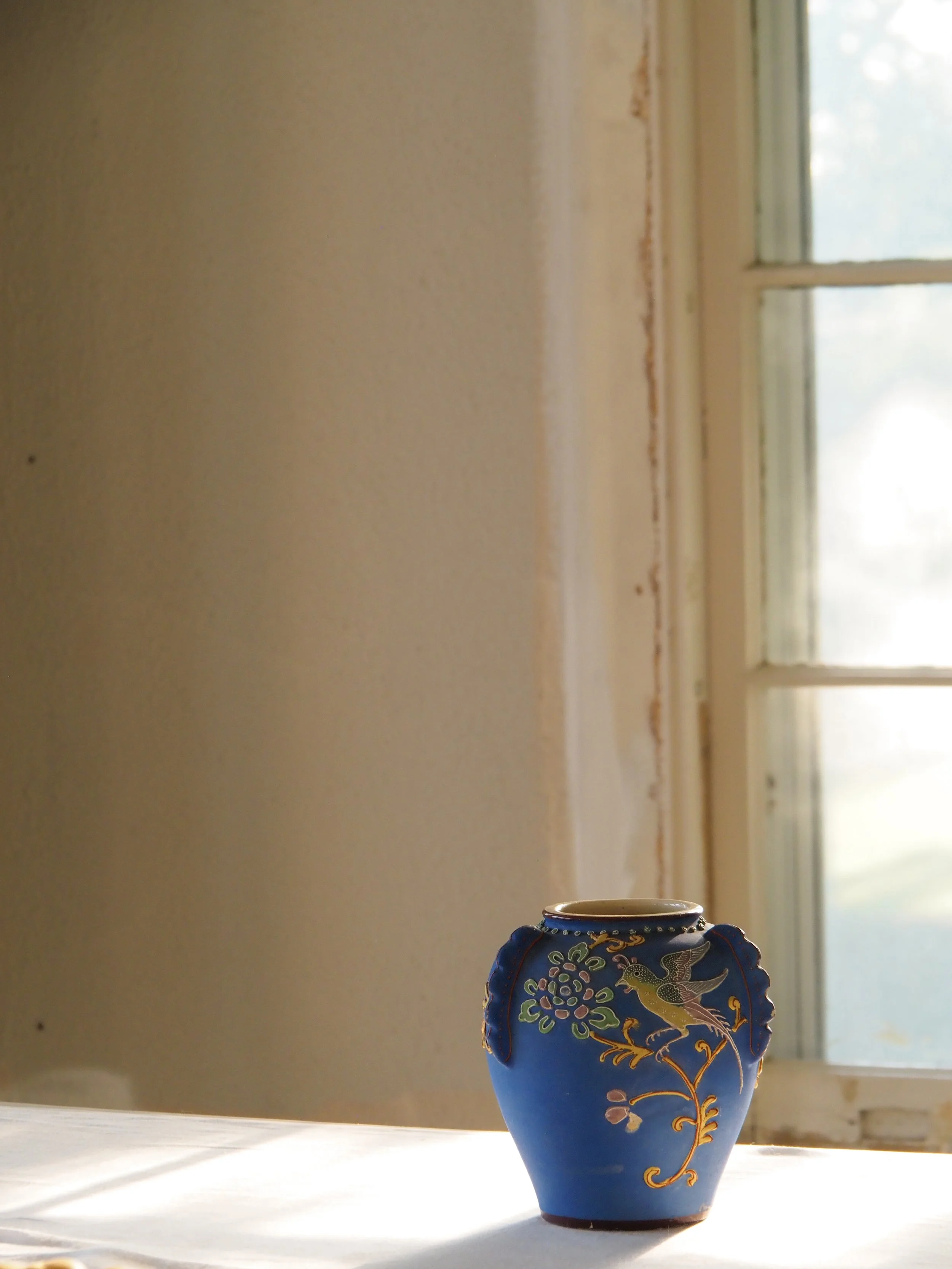
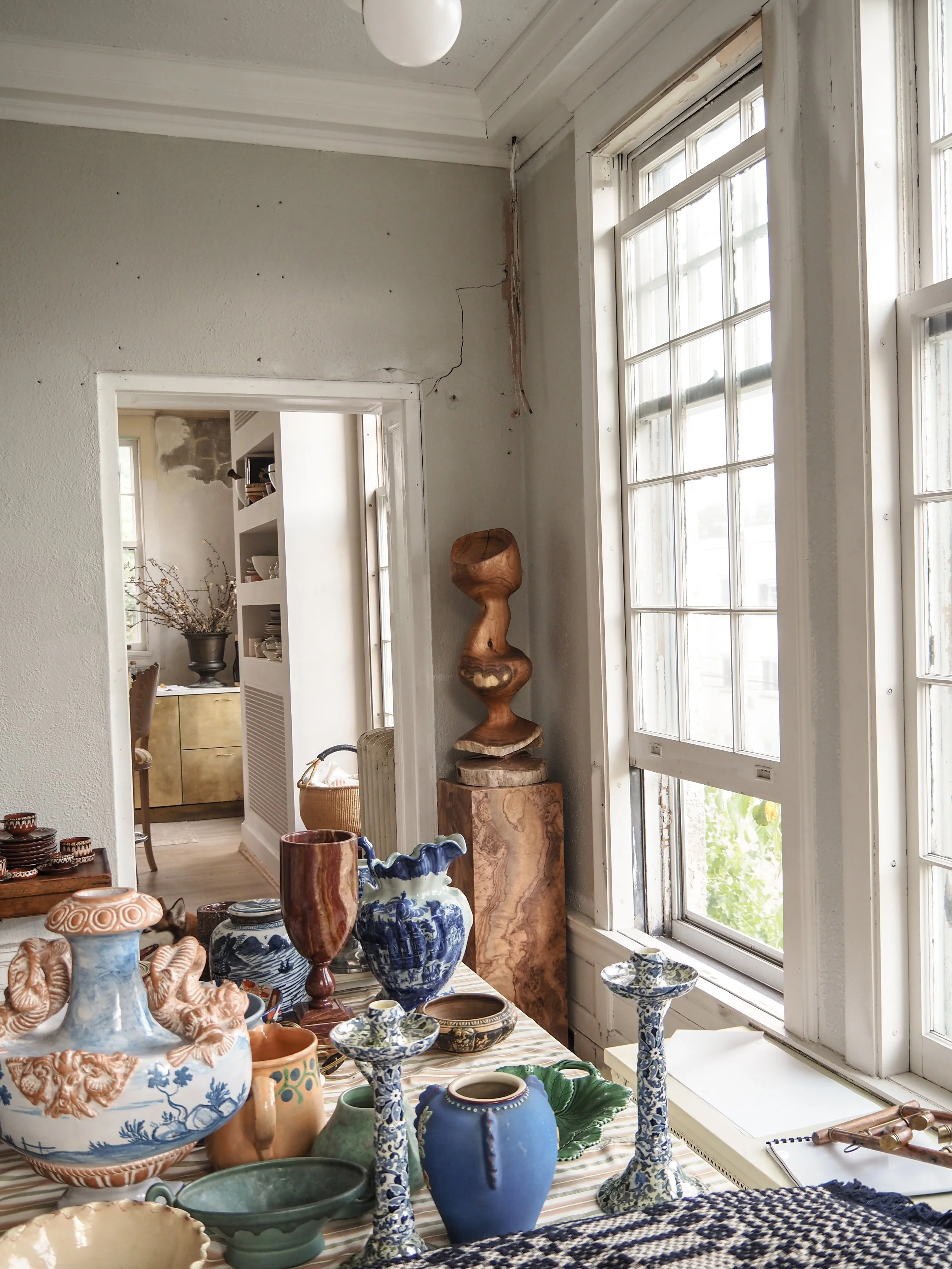
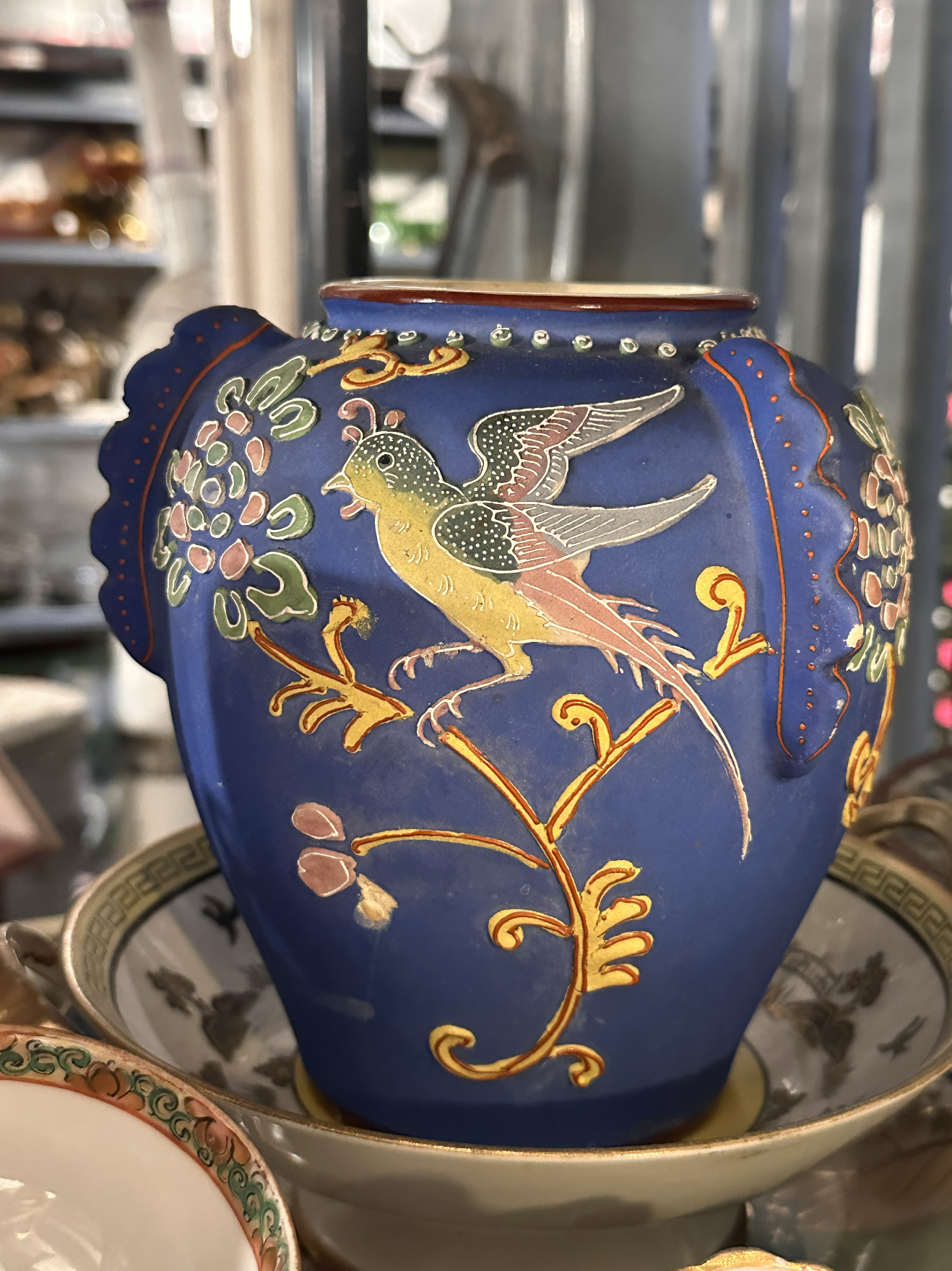
A Japanese Satsuma vase defined by its moriage surface, where raised enamel is built up across the form to create depth and texture.
Rather than relying solely on painted decoration, the surface is constructed through applied elements, allowing light to catch across the raised detailing. This gives the piece a dimensional quality, where ornament functions as structure rather than embellishment.
The vase reads as both vessel and surface object, holding presence through density and material accumulation rather than scale.
-Size:9inH x7inDia
-Materials: earthenware with moriage enamel
-Provenance: late 19th–early 20th century, late Meiji to Taisho period
-Made in: Japan
-Notes:
A Japanese Satsuma vase defined by its moriage surface, where raised enamel is built up across the form to create depth and texture.
Rather than relying solely on painted decoration, the surface is constructed through applied elements, allowing light to catch across the raised detailing. This gives the piece a dimensional quality, where ornament functions as structure rather than embellishment.
The vase reads as both vessel and surface object, holding presence through density and material accumulation rather than scale.
-Size:9inH x7inDia
-Materials: earthenware with moriage enamel
-Provenance: late 19th–early 20th century, late Meiji to Taisho period
-Made in: Japan
-Notes: